Let There Be Lite

Following the lamentable indulgence and gratuitous abandon of the previous post I feel it is necessary to compensate by furnishing a visit to Pedant’s Corner. I noticed that on more than one occasion in Strength Weekly I have inveighed against the notion of ‘re-invention’. An article by Andy Gill on Radiohead in today’s Independent Arts & Book Review features the observation that, after OK Computer, ‘again they re-invented themselves’. This strikes me as a perfectly good example of the non-romantic use of the term. Such moderate use is increasingly rare, however.

My beef is that the most common use of the term refers to an impossible psychological operation. Since it is impossible its execution can only be illusory.

When David Bowie was being Ziggy Stardust in 1972 we were told that the singer had been inhabited by the character. In 1973 he released Aladdin Sane and would subsequently only ‘become’ Ziggy intermittently. However, he was and continues to be, described as capable of ‘re-inventing’ himself.

This was seen as unusual within the pop business but even then it was recognised that Bowie was only doing what actors do every few months, if they can get the work. It was not his ‘self’ that was being re-invented – just a performance persona. Hardly psychological rocket science.

What Bowie and Radiohead do is develop. In less exotic milieux people do this all the time. Often the development is gradual but if you haven’t seen them for a bit it strikes you as a sudden change. Sometimes it is actually sudden, insofar as the components of what will be the new development are not evident, for a variety of reasons, until the last moment.

But the current use of ‘re-invent’ refers to a transformation that is adept, magical and barely involves any process. It seems to be premised on the conviction that there is nothing in our psychological makeup that could prevent rapid and profound transformation. It seems, in fact, to be based on the idea that there is nothing psychological.

Once the tiresome baggage of the psychological is disposed of then what is left is, presumably, feather-light and infinitely malleable. It’s purely reactive – at night time it shuts down and is unburdened by dreams. It is My Little Pony.

This cheap-airline-hand-baggage-only quantity (we can’t really call it a ‘self’ without confusing the issue) resides on the other side of the skin to the tattoos, the adornments and the garments. It is a possession, like the other accoutrements. It is owned. As such it is readily replaceable. There are no ‘circumstances’ that define it or constrain it. You can change it whenever you want. There is nothing ‘beneath’ it.

I blame capitalism but then I usually do. Even the newsreader’s ever-changing tie has a newsreader behind it.

05.10.2007

Chokey

While Strength Weekly has never aspired to the confessional the following intimate account contains a cautionary element that justifies its inclusion in a publication that has consistently concerned itself with the higher things. Two weeks ago I was standing beside a curb. I stepped off it, descending five inches to the road below it. I then broke my ankle. I did not trip. I did not stumble.

While passing the time (four hours) in A&E reading Paul Berman’s streamlined and incisive ‘Power & the Idealists’ (a higher thing) I noticed a reprobate sitting opposite me. It was clear that this was his condition because he was manacled to a police officer. To be precise, his wrists were inter-manacled with one set of cuffs and his right wrist was manacled to the officer’s left wrist with another. On his left side sat another officer, not manacled to anything. The prisoner was in his mid 50s, bespectacled and had tattoos on his neck. He seemed rather distracted, not noticing the immense pleasure he was giving the curious – all of us in A&E – who could not stop peeking at him every few minutes. He did not seem to be in pain. I noticed that the police officers’ shirts – they were jacketless – were extremely white and very nicely pressed. I wondered if they did their own ironing and how many identical shirts they had at home. The manacled officer looked irritated, possibly because every time the prisoner chose to scratch himself he obliged the officer’s arm to move through the air in an abstract way.

This episode with the prisoner has no bearing on the intimate disclosure I am about to make. I wanted to mention it though.

The bone in my left ankle was only very slightly chipped and after twelve days of crutchwork (one of my favourite bands) they cut me out yesterday and I have been treading gingerly. It was put to me that I should take certain supplements in order to forestall further chipping and snapping. I had some ‘Chewable Calcium & Vitamin D’ which, while a little powdery, has a pleasant vanilla flavour. A well wisher also gave me some quite expensive glucosamine sulphate tablets which stop your joints squeaking. These latter are the colour of pale biscuits and are long with rounded ends and a crease across the middle so that you can snap them. I must confess (untypically) that I find them quite hard to snap. A stronger person might not.

I placed the second half of the glucosamine sulphate tablet on my tongue, took some water into my mouth and swallowed. The tablet moved to the back of my mouth. I swallowed again. The tablet moved lower and stopped. Still fairly calm, I took down several large mouthsful of water. The tablet did not shift. I coughed. The tablet was too far down. I coughed harder. I could feel the tablet wedged in my pipe. I was aware that while one end of it was rounded the other was rough and spikey. I could feel the spikes in my pipe. I became less calm and started to retch. I refilled the glass and rapidly drained it. I knew that this was not as methodical as it could be: the retching should raise the tablet while the drinking should wash it downwards. Why do both?

It was time to puke the fucker. I grasped the side of the sink with both hands and began hoiking violently. Nothing. I became frightened. Was I to die in a derailed act of self-medication? A curious condition possessed my body. I wanted to hoik (to ‘chat with Roy’ as we used to say) and so did ‘the body’ (as Greco-Australian body artist Stelarc refers to it). I thought I should actively compel the body to hurl but the body just did it of its own accord. As the body bayed, barked and roared I growled, gagged and hawked. I saw my throat evulse and my lungs evert, hurtling pinkly from between my bared teeth. My stomach evaginated, my intestines prolapsed, upwards. Waves of gag racked me as the canals unfurled (younger readers should note that the author, here, is projecting his feelings onto his anatomy).

Then I heard a high, clear note. What could it be? I realised that so thoroughly wedged was the tabhalf that it had made a whistle out of my pipe. Every time I breathed in, or out, I whistled. I had become a whistle. I was really scared now. What the whistle said was that the pipe was largely blocked, to the extent that wind passing over it was squeezed to the point of shrieking.

I had to get it out. I had to get it out. I yawned the front of my head open until I had created a funnel leading from my cakehole to my anus. I breathed in, thereby connecting the two polar points. In a final all-or-nothing heave I separated the points and a Severn Bore of impulsion thundered through me.

The tabhalf, I kid you not, shot into the sink and disappeared between some plates. I fished it out. It was covered in blood. I showed it to a member of my family. “For God’s sake, I don’t want to see it. You’re sick.”

I went to bed, hoping to sink into a deep sleep. But I had got over-excited again. I stared, instead, at the ceiling.

11.10.2007


The Resemblance

On Channel 4 News, an interview with Philip Rosedale, founder and CEO of vast virtual metaverse ‘Second Life’. He appears to have fair to greyish hair with a spikey fringe. The camera angle was quite low and the lighting was such that Rosedale bore an uncanny resemblance to his own avatar in the virtual world that he created. (The photo above does not, alas, suggest this with convincing force.)

In ‘Self Expression’, to be found elsewhere in Strength Weekly, I refer to a Japanese roboticist who, when speaking to his extremely lifelike animatronic replica, discovered that he was adapting his own lip movements by speaking more slowly, in order that the android’s lips could be synced with his own more readily.

The Rosedale Resemblance, as I shall call it, takes this example of technoDarwinian adaptation rather further.
A number of possibilities arises, each of which must terrify:
If you make something you become like it.
If you make something based on the simulation of life then the gap between you and the simulation decreases.
The man on the television was not Philip Rosedale but his avatar (graphic representation of a Second Life user).
The television interviewer was also an avatar (did news presenter Jon Snow know this?).
The avatars want you to become like them (they find us sexually fascinating).

We find our replicas sexually fascinating and pick up tips and hints from them (at the moment you can’t fuck them but it’s just a matter of time).

Television is being slowly taken over by avatars (it has to be slow so that it is not noticed).

In the interim phase, in order to acclimatise viewers to the coming Shift, presenters, interviewers and personalities will be chosen for their low affect and narrow facial-expressive range (this is what Botox is really for).

Newspaper campaigns have been orchestrated to emphasise the advantages of a life in which i) you get what you want because you deserve it (the word ‘pamper’ is often the giveaway here) ii) you have complete control over how you are seen and what is known about you (the word ‘re-invent’ is often used to indicate the scale of the freedoms available).

When the Shift is finally effected those not residing within the metaverse will feel lonely, self-conscious and prone to feelings of unreality that border on the schizoid.

It may be, and this is highly speculative, that attempts will be made, from within the metaverse, at some time in the future, to retake the First Life arena (see Debray, Regis: Revolution within the Revolution?). It is more likely, however, that strong feelings of disgust will inhibit all but the least socialised on Earth II.

26.09.2007

Flares

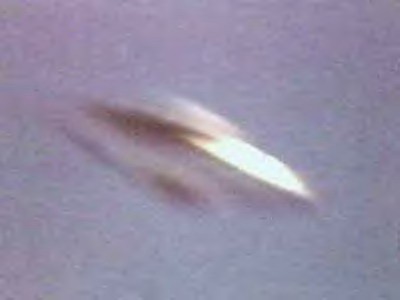
Some years ago GQ magazine sent me to Area 51 in Nevada and Roswell in New Mexico to check out the UFO thing. I was driving my saloon along a very long road in NM when I saw a sign with the legend “Roswell Crash Site: Tours”. I backed up and was able to join a party of the curious as they were escorted, in 4x4s, to an outcrop of rocks amongst several outcrops of rock. The last few hundred yards of the journey were made on foot. I fell to talking with a pleasant man. I asked him what his interest was in the UFO business. He said “I’m a researcher.” My father was also a researcher, he worked in chemical microbiology. For him, research consisted of testing hypotheses by means of repeated, precise experimentation. It was considered, in his circles, a little off-colour either to ignore inconvenient evidence or to doctor the evidence so that it fitted the hypothesis. The word ‘research’ used loosely, does, of course, simply denote the process of ‘looking into’ or ‘finding out about’ something. This guy near Roswell, however, clearly craved the cachet of being seen as scientific rather than enthusiastic.

The problem here is that UFOs did not land at Roswell or nearby. Or anywhere. Prior to the GQ assignment I looked into some books on UFOs and found them exciting. I subscribed to some remarkable mailing lists on UFOs and read literally hundreds of accounts of encounters of the various kinds. After a few days all the stories sounded the same. My interest in anecdote fell away abruptly and I returned to the sceptical position that had been temporarily sidelined by the welter of late 20th century fairy stories.

What does warrant continued examination is the matter of people seeing what they want to see. In UFO circles the practice is extreme, considerably more developed than the universal editing tendency to improve or degrade experience, depending on temperament and broad circumstance. Of the varieties of remodelling with which I am familiar, the most fascinating is the one where the modeller sees lights or objects in the sky and then upgrades them. There are many social and psychological factors that can be considered of explanatory value here, but to put it baldly: there are processes of socialisation that teach us all how to ‘see’ in a way that is more than mere physiology but among us there are some that get away.

The ones that get away, the ‘visionaries’, bypass the corral and enjoy a plastic universe. The word ‘enjoy’ feels appropriate because, hey, wouldn’t it be nice to see what you want, out there, not just feel it, in here? Despite my disdain for the narratives used to support such seeings I can’t deny a tinge of envy sometimes. But then I remember the Lens Flare Lady, whose portfolio of flying object photos is packed with night shots of strange lights that are so very obviously optical artifacts that she has learned to produce by cultivating her technical incompetence.

And then I remember Radionics and lose the will to continue writing.

21.10.2007

Yearning Part II: Keira & the Life of Pie

Keira, in the view of the blunt, should eat more pies. In ‘Atonement’, however, she reciprocates very well, in her lo-fat frame, the torrents of yearning addressed in my previous post. The film, initially, is set in the late 30s but such is its costumer style (Joe Wright previously directed ‘Pride and Prejudice’ (2005)) that it’s easy at times to feel that we are in a generic past, a large part of which is dominated by the established ‘TV-look’ of the 19th century. Keira’s slightness of build then becomes not only an upper class affliction but evidence of tuberculosis – she is the palely interesting consumptive of 19th century romance.

Those who yearn are consumed by their yearning and, given half a chance, would vampirically consume the object of their yearning. The character of Cecilia (Keira) is the object of Robbie’s (James McAvoy) protracted yearning – she becomes Robbie’s pie. It is, therefore, fitting that she is very thin for it suggests that she has already been consumed by Robbie, who has enjoyed a semi-sibling relationship with Cecilia since her father took him under his wing.

Several years must pass before Robbie can get this stuff off his chest among fighting men. Mortified by his gobbling of his patron’s daughter, Robbie goes for a long walk into war, ending up in a less complicated but more poetic scene in which his yearning finds satisfaction in slaughter.

15.09.2007