Riverine, Movish

Before posting on ‘advertising characters’ as promised below, I will report that the second season of my Peachy Coochy Nites has drawn to a close until the end of September. One thing this means is that the curator will not have to devise publicity mailouts on a monthly basis for a while. Not that he minds doing that. In fact he rather enjoys it. Here’s a chunk of the last one:

Dear Friends
I cannot put it more plainly: the Last Peachy Coochy of the Season will take place next Thursday June 25th. Just think, Friends, two whole Seasons have passed, each Season comprising 9 months and each month comprising 5 Coocheurs which is 45 Coocheurs per unit Season which is 90 Coocheurs since the inception of the whole crazy, life-enhancing, team-building, inspiriting, runaway, whirlwind, tatterdemalion, light-hearted, frothpacked, foamfilled, bulgent, have-you-seen, must-have, let’s go, clippety clop, rickety rackety, jazz coloured, fresh, electrifying, hello mother, did I leave my coat here, puissant, ectoplasmic, rocking, feisty, hep, spunky, good morning mister andrews, jack of many pullovers, yellow, christine, caroline, eckhardt, tingling, poppy, bulgent, heterodox, delicious, enrobed, deep fine leg, brisk, enpaced, movish, alongular, winsome, irradiated, flushed, enstartled, praxic, appointing, engruntling, who are you looking at, instep, outfront, disbodying, entrancing, enchanting, spellbinding, classy, of the people, of the populace, of them, the massive, the wide, the enbiggened, the opening, the way in, the way out, the distance made near, the far made close, the away made home, the tarmac made den, the airfield made niche, the spot made prick, the point made sharp, the mystery deepened, the unhelpful to the fore, the revelation smirched, the glimpse gone, the need, the yearn, the healing power of story, excuse me while I retch, the axelrod, the roving reporter, the contretemps, big, funny, jerky, the shapes thrown, the mustard cut, the full basket, the rug cut, the cards cut, the kid cute, the bicycling holiday, the infamous four, the neglected three, the lonely one, the sociopathic six or seven depending, here are some moments that I lived earlier, here are photos of Gran, here is Callum, here is Philip, there goes that cat you killed Tony, I never, yes you did you fucking stamped on it, I never, the bustle, the pack, the number, bulgent, full, bristling, undressed, socked, shoed, implenished, blue, green, up, in, by, at, get,

This is what you get:
David Gale’s Peachy Coochy Nites
The projector projects 20 images for precisely 20 seconds each. The Coocheur (or Presenter) speaks for precisely twenty seconds per image. Randomness is discouraged but narrative linearity is not automatically esteemed.

David Gale, having launched a nationwide performance must-have, continues to curate this series of Peachy Coochy events at ArtsAdmin’s new, stylish yet reassuring Bar. Each event features six Coocheurs, or Presenters, drawn from many walks of life. Each Coocheur will compose a verbal response to 20 images of their choice. Each presentation lasts 6 minutes and 40 seconds. There will be gaps between presentations for drinking and light conversation.

David, something of a Black Belt in these matters, will both compere and present the chopped torrent that can never be the same river twice.

A recent patron observed:
“It is not the table the chair it is the atoms the light the sense of the invisible the lifting of the veil”
(Sylvia 3/06/09)

Peachy Coochy Nites subscribes to the National Belief System and is therefore committed to the provision of a wide range of contributors such as the impersonator, the fraud, the copyist, the colourist, the marker, the maker, the destroyer, the undoer of worlds, the spoiler of schemes, the darkener of doors.

29.06.2009

My Name is Product

Ardent readers of this publication will be familiar with the Editor’s need to visit secondhand bookshops every 48 hours lest he succumb to uneasiness. The thing about such rhythmic behaviour is that eventually all the books one has craved become one’s own. If the bookomane reads book reviews, regularly inspects stock in the big bookshops, notes down titles mentioned on the radio and television and by friends etc, he will soon generate a list as long as his arm. Let us say that the bookophile lives one hundred years. In that time he will almost inevitably pick up everything on his list as those volumes are steadily discarded by those who do not know any better. This could amount to hundreds of books. It is, furthermore, conceivable that, even as death approaches, the outstanding volumes will be secured. Given that the bulk of the books thus acquired will not be read in the lifetime referred to earlier, it doesn’t matter if a few are never located. One is not obsessed.The key to all this is, of course, memorisation. One must be able to recall that, possibly several years ago, a particular title or author was placed on the list. One can, obviously, read the list from time to time to refresh the memory but I must confess I’m a hardliner on this one: it is a sign of weakness to read the list. It exists because the act of adding to it constitutes a memorable operation in itself. No further consultation should be necessary.


I was recently very pleased to secure a particular used volume in the local branch of Traid. This is its cover.

I first saw it in Magma, in Clerkenwell, where I should have bought it without further ado (I am not averse to the new purchase). Sensing that the volume was a portal to some interesting thinking, I did, however, remember it. But not well enough. After a year or two I had forgotten both title and author(s).

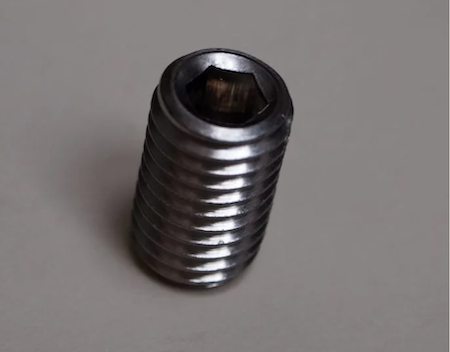
Finding myself in the Clerkenwell area again – I was seeking out a source of grub screws (the ones that prevent door knobs from falling off) – I popped into Magma and endured the following exchange:

“Do you have that book that you had with pictures of the figures that you get in advertisements?”
“How do you mean?”
“You know: it’s a collection of the little…er…figures…you know…like little men and animals that are associated with products?”
“I don’t think we’ve ever had that.”
“You have! I mean ‘You have.’ It’s full of images of…they’re like cartoon characters! They help sell products.”
“No.”
In the next post I will take a look at some of these cheeky little items.

26.06.2009

They Live

Ever keen to provide material for Strength Weekly by having experiences the editor of this journal and his wife visited a party to which they had been invited in the north of this city. I will not condemn the suburbs outright for they nurtured J.G. Ballard thoughout his career and have catalysed, in their severity, the emergence of countless lively bands. This suburb was leafy and closer to not being in the city than being in it, prompting this exchange :
“Why do people live so far from the centre of this big city? It’s not like living in the city.”
“I agree with you, darling. Why don’t they live in small towns? Then they would be near things.”
“We should not forget, though, my precious, that they may not be here by choice.”
“Well, yes. There is that.”

We had forgotten the street number and there were no balloons to be seen. Balloons make things so much easier but I fear they are associated with the younger crowd. We did hear a low murmur, however, and knocked on the door. After waiting a while we pushed the door. We could see right through the house into the garden, which had a number of people in it. We made our way down the corridor, clutching our bottle and smiling in a generalised way. As we passed the sitting room on my right I glanced in. An unshaven man was seated by a coffee table, staring at it silently.


Suddenly we were in the kitchen. The air was close and still. There were five people there. None of them looked at us. Two were by the sink cleaning plates and glasses. A man sat on a stool, gazing at the floor. I realised that no sounds were coming from the sink. The cleaning was being conducted in perfect silence. Even the impacts of the utensils upon each other were somehow cancelled. A woman in a long dress walked slowly across the space. She had no facial expression. The air was so thick you could lean on it. Out in the garden were sixty people. They were murmuring.
My wife began to pull at the foil on our bottle. An elderly lady moved towards her and said “Are you going to open that with your teeth?” In my mind a voice said “Of course not, you silly old fuck.” Sometimes you can’t stop your mind. We poured ourselves a drink and and stepped through the french windows to the garden. The garden was terraced so that we found ourselves looking down to the far end where there was a shed. A man sat at an electric piano smiling. There was a mat on the grass. Some young people of student age stood beside it. They wore black tee shirts and leggings, like Left Bank bohemians from an imagined 50s. Some had beards. I looked for food but most of the bowls had been scraped clean. The man at the piano started playing music from the olden days. The young people proved to be dancers, for they now moved onto the mat and began throwing olden days shapes in a not entirely competent manner. As far as I could tell the dancing was imitative of that which is thought to have prevailed in the Elizabethan era. The lack of skill, the latter normally so crucial to that which is gripping, was gripping. I made my face go neutral, just in case.
After two such ‘numbers’ the troupe stepped off the mat to a faint patter of applause. A person stepped up to a microphone and spoke. The P.A. was not working. Nothing could be heard. My wife began gesturing to me as if to say “Amscray! Pronto!” Soon we were back in the street. On the way out I met a guy I knew from the past. We exchanged pleasantries. I said we’re out of here. He said but you’ve only just arrived. I said no we have been here since 4 o’clock. He said I didn’t see you. I said we were in the shed.
Readers accustomed to Strength Weekly’s insistence on closure will want it. My wife said “Fuck, I wish I hadn’t spent all that money on that wine.” I said “It is quite clear. They were zombies. We stumbled upon a clutch, coven or group. They live.”

19.06.2009

Stage & Screen 6

This is the final post in a series that begins below with ‘Stage & Screen 1’

In ‘The Truman Show’ (1998) Truman Burbank is the unwitting star of a hugely successful documentary TV show based on his life. The show runs continuously, following Truman from the moment of his birth into adulthood. Truman is completely unaware of the fact that everyone in his life, ranging from his wife to passersby in the street, is an actor hired to make him think he is an average guy doing normal things. The show, watched by millions, takes place in a specially constructed dome with a fully controllable climate and 5,000 concealed cameras. The setting within the dome is a seaside town. As the film unfolds Truman gradually becomes aware that something odd is going on and, after severe disillusionment and much frustration, is able, at the age of thirty, to escape the dome into the real world beyond.

In ‘Synecdoche New York’ (2008) Caden Cotard, an unsuccessful theatre director, starts to show signs of breakdown when his wife leaves him. When he is unexpectedly awarded a large ‘genius grant’ he determines to spend it on creating a piece of theatre of surpassing realism that will be enacted by a cast of hundreds in a vast replica of the city, constructed in an enormous warehouse. Rehearsals take several years, in the course of which Caden even employs actors to play the parts of himself and his assistant. While life in the warehouse city becomes increasingly hard to distinguish from the real thing, Caden cannot bring himself to open the ‘show’ to the public and he and the cast grow increasingly isolated. Eventually he employs an actress to play himself while he takes her former role, that of cleaning lady. The new director guides him through his last days as the cast dwindles away and at the point of his finding a way to finish the play she gives him one last instruction: “Die.”

Truman Burbank is, at first glance, the dupe of a pervasive and overweening media whose productions synthesise classic Orwellian surveillance with a hyperextension of the logic of a game show. The film invites comparison with our own lives with its proposition that a comparable constraint is exerted upon us all. This is apparently the view of the film’s director, Peter Weir, who has said that essentially the film is about ‘Control. It’s a system of control that is larger than the one Truman lives in, at least.’ Weir also states that ‘…the primary influence – or call it control – in our lives is television, so the metaphor of the movie certainly applies to things we see all the time.’ Breakout is advocated. You must escape the compelling comforts of the false to find the real (see also ‘The Matrix’ (1999)). Such a critique and its suite of recommendations have force but they are a bit tired and familiar.

If, however, Truman’s plight is introverted so that it’s more about him and less about surveillant media-dominated consumer society blah blah then the film describes an individual’s psychological delusion. Plotwise, Truman is not suffering from delusion – a highly skilled team is maintaining him in a state in which he believes all is well. He is deluded in this belief but not because he is psychologically frail. The delusion that one is the subject of a continuous TV reality show is, however, apparently on the increase. This New York Times piece reports growing numbers of individuals presenting the ‘Truman Show Delusion’ at psychiatric clinics, some ten years after the movie opened. While it is quite possible that some of these patients saw the film and found in it a tipping point (the NYT piece confirms this), other patients suffer the delusion without having had the inflight entertainment.

The delusion is not a simple mimetic phenomenon as in ‘See the Movie, Get the Delusion!’ or a new psychiatric formation so much as the product of a hitherto contested mode of transmission, in which a condition has a broad source of generation rather than arising from distinct sets of unrelated circumstances. The transmission, in other words, is cultural. An example of a culture-specific condition would be genital retraction syndrome, wherein the subject experiences great anxiety due to his conviction that his penis is withdrawing into his body. The syndrome is largely restricted to societies within which witchcraft is prevalent.

There is controversy in psychiatric circles about the status of culture-specific conditions. I am not familiar with the specifics of the debate but suspect that it may reflect a territorial conflict regarding the mechanisms of the formation of neurosis. The history of psychoanalysis unfolds from seminal case studies of neurotic middle class individuals who were deemed to have been psychically damaged in some way by prior experience. This experience was restricted to the impact upon the patient of significant individuals, often family members. While the playing field has subsequently been considerably enlarged (including by Freud himself), it may still be the case that there is an influential body of opinion favouring the restriction of psychogenesis to small and accountable networks.

Once this limitation is relinquished we enter the territory of, to quote the Bill Murray character from ‘Ghostbusters’, ‘Human sacrifice, dogs and cats living together, mass hysteria!’ Once families are seen as filters for pervasive social malignancies which they pass on to their offspring then, at last, society is to blame! We are living in the Laingian schizogenic society (see ‘Stage & Screen 3’) and it is the Prime Minister, as well as my Mum and Dad, who has fucked me up. What a relief! Now I can focus my anger in a more socially constructive manner. Now we can listen to Patrick Schofield (see ‘Stage & Screen 4’) without secretly thinking ‘His Mummy didn’t love him, the loser.’

Patrick was ejected from his place of confinement, Truman had to fight his way out. I’m afraid the unwhimsical truth is that Patrick committed suicide three years later. I saw him quite a lot after the bin and before his death. It may be that he found life outside to be merely a more skilfully choreographed production of the same violent theatrics he had endured and analysed in the mental institution.

In ‘Synecdoche…’ Caden Cotard also dies but he has had the opportunity to make the world in his own image, thereby sealing it against the viruses that had unravelled his real life. The project is grandiose and it achieves a grand scale before the world maker is revealed as the bearer of the virus he wishes to extinguish.

Caden in 2008, unlike Truman Burbank in 1998, has acquired the power attributed to the secret police by the anonymous author of the American ‘surveillance theatre’ document (see ‘Stage & Screen 1’). The conceits of ‘The Truman Show’ would not now beguile us as they did when the movie came out. We have moved on. As we near the end of the first decade of the 21st Century the prospect of being duped by ‘the system’ is not so interesting. It’s obvious. It’s obvious in part because the dramatic collapses of crucial structural elements of the system have served to expose something of the mechanics – the manual has been leaked into the public domain.

The 80s in the UK taught us, confusingly, that we were emperors and that we were shit. Digital technology, in the 90s, offered new (virtual) places to go where shits could be emperors and nobody would know they were shits. A lot of men (rather fewer women) thought that it was only a matter of time before every shit would have his own hand-carved haven. This, despite its grandiosity, is not the Truman Delusion – Truman was a victim. This is a delusion of authorship in which the victim rewrites the dictionary so that there is no longer an entry for ‘victim’. In the world thus created there can be no pain, only scenarios depicting it. After all, we have seen the manual and it has shown us that much of the system is a charade so clearly the way forward lies in theatrics.

14.06.2009

Stage & Screen 5

This post is part of a series. Please start reading at ‘Stage & Screen 1’ below.

In his editorial introduction to the January 1968 special edition of ‘Scalebor’ mental hospital magazine, price sixpence, 24 year old ‘schizophrenic’ inmate Patrick Schofield refers to “the hundreds of men and women who find themselves living and working” in the hospital and states “We have tried to make the magazine an expression of their real suffering, their conflicts and their pain. We hoped to include their hopes, but we did not think it right to invent them for you.”

These words are the preface to an essay stapled at irregular intervals between the variously coloured and crudely reproduced A4 sheets of the DIY publication. Perhaps Patrick thought that his incendiary critique would be less easy to rip out if he packaged it thus. The essay is titled ‘Strange Admissions: the fear of madness and the madness of fear.” Shortly after publication, Patrick was thrown out of the loony bin and sought help from the radical shrinks of the Philadelphia Association (see ‘Stage & Screen 2’).

Here are some excerpts:
” Within Scalebor there are three main types of job: you can be a psychiatrist or therapist, a nurse or a patient. But these words are nothing more than labels. Many people at Scalebor take this labelling so seriously they completely lose sight of the fact these labels are only very approximate indications of the tasks people do. It is only when we are nearing the verge of madness that someone can claim that the staff are superior to the patients because they are staff and the patients only patient.

It might be useful to look at what is happening inside Scalebor in terms of games theory and transactional analysis. The game is called ‘Mental Hospital’; there are two sides opposing one another within the hospital, one called ‘staff’ and the other ‘patients’. At the moment we shall confine ourselves to the game between nursing staff and patients; the ‘psychiatrists’ play it rather differently than the nurses.

That there is ceaseless conflict between nurses and patients is quite obvious; the game itself is far more complex. The patients are merely the counters with which it is played; anyone who wants to develop this can find themselves hours of amusement in following the daily struggles between nursing, administrative, psychology department and medical staff; how they play one another off, stab each other in the back, shift the blame and the responsibility. What is important here is the prize; and the prize to be fought for is power. That is, power over the patients. This can be exercised directly (nursing staff on the ward) or by gaining control of all the other sectors of control.

These battles are so heated that the supposed reason for the hospital’s existence – the welfare of the patients – has become merely the issue around which the feuds and vendettas are fought.

Let us focus on the major outline of the staff’s game. Its object is clearly to control the patients so that they may be maximally exploited (‘cured’) before they are ejected back into the outside world. If the staff as a whole can frustrate and nullify everything the patients try to do, this will make their task extremely violent but quite easy. It is therefore their aim to ensure that nothing, absolutely nothing happens. This would of course be impossible unless extremely violent techniques were brought to bear. It is these techniques that effect and maintain that terrible feeling of silent murder that pervades the hospital.

The only counterploy available to those who find themselves cast as patients (they are the only group in the hospital who are on the receiving end all the time) is to get clear of the place as soon as they can. If the patient goes along with the staff’s idea of what a good patient ought to be, he must wreak the most awful violation upon himself. If he feels that he must not do this then he must break with the passivity he is ordered to realise. But within the game there is no room for an active patient. It is enormously threatening to the staff’s attempt to keep control, for a patient that argues, criticises and does things of his or her own initiative gives the lie to the staff’s belief that the patient is purely an object-animal.

The only organisation that Scalebor manifests is that of permanent mobilisation against the patients. The staff cannot bear to look at the chaos within themselves so they project this out onto the patients and try to abolish it out there.”

Patrick Schofield’s essay continues in this manner. It dissects and analyses the relationships between all the contending groups in the loony bin and produces a compelling picture of the patients as a group of hapless, useful ‘object-animals’ who serve to dynamise the submerged but psychotic objectives of cabals of incarcerated professional healers.

Towards the beginning of the excerpts Patrick turns the propositions of ‘game theory’ against those who vie to heal him. These useful concepts – premised on an inescapable performative alienation at the very heart of ‘everyday behaviour’ – hark back to 50s transactional analysis (and probably, in Patrick’s case, to Eric Berne’s book ‘Games People Play‘ (1964)) but draw attention to the scripting and role playing that are generally unacknowledged in everyday life. They are, of course, taken for granted in the performing arts.

Vaulting blithely over the intervening decades I will, in the next post, offer some comments on two movies that straddle the millennium: ‘The Truman Show’ (1998) and ‘Synecdoche New York’ (2008). Ten years apart, they demonstrate the shifts in ownership that have come about with regard to matters of theatricality as the latter have corroded the notion of unpremeditated and unselfconscious behaviour.

09.06.2009

Continued in ‘Stage & Screen 6’…