Dash: Sleet: Bit

A speech from ‘Sleet’, the fifth show in the  ‘Dash Dash Dash’ series (March 2010)

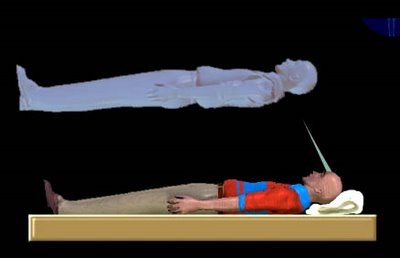
To get where I am today, Gretchen and Bobbin and Timmy, I turned right at the road and over the hedge and into the field and under the bridge and along the track and down to the dark stream and up to the copse and across to the pools and over the leaves and through the bushes and into the hedges like houses and between all the reeds with edges like knives and up to the trees with black boughs bleeding and the yellowing weeds that were rotting like twigs under logs squeezing the sod like sponges the water came down my wrists and under my jacket with dozens of creatures and spiders and leeches and there were the men with their vans and their string walking the woods with hands in their coats clutching paper and wrappers and clippers and cutters and things for removing the whores and the harlots like Wendy and Charlotte who got away by the skin of their teeth from the creep who sat by the pool his dick in his hand beating the meat saying Girls why are you out in this place as the light drops through the sky and the crows settle down the rabbits retreat to their homes that don’t have windows or curtains or seats by the fire just earth and more earth and some roots and some shit by the door that’s where you belong Ruth and your friend my name isn’t Ruth so fuck off you jerk and we ran to the town down the lane to the house where we turned on the lights and looked through the drapes at the lamp in the street where a dog with three legs and a growth on his neck carried a pizza and pissed on the post while wolfing the slice including the bag then glanced at the house and his eyes both went red and the beams cut through the night and the fog and up on his legs he tore at his chest his coat fell apart like a coat on the road and out from his guts her hair all in flames stepped the girl with white lashes white brows no dots in her eyes no marks on her skin she stepped off the kerb slid past the cars and knocked on my door I’m not in I’m not in she pushed and was through in the blink of an eye she said I’ve come to stay I don’t eat I don’t sleep I said there’s no room she said who needs room she moved fast I felt sick she pushed at my breast slipped in through my chest at which point I acquired all of her charms her light and her dark her brutal disdain and Gretchen and Timmy and Bobbin you’re thinking just what did she get that was worth such a palaver my spirit my soul well to be frank I never had either so there was nothing to lose it’s not like there are insults or upsets or outcries and such like no we’re working together she lives off my fear it gives her resolve it keeps her on tiptoe she just says Why not when you can and Go on what stops you there’s no system no one is watching is there someone above you someone who’s counting or checking fuck that there’s no one there’s nothing it’s all just a story come on over it’s better you do what you want you live where you can you eat what you find you fuck if you want to there are no higher powers or despicable drives it’s just what you are so fuck all the ups and the downs you don’t have to tread like a girl on some eggs that will shatter if you don’t gaze at your shoes like some worm on a log in a wood in the winter no let’s go now you and I not like a nation ether-eyed beneath the table but striding straight to places where the pirates piss the divers decompress the gliders come to roost the motherfuckers do their mothers and me and Angelina can just come and go talking to Michael and to Joe just like citizens well not exactly so more like shadows that you pass but on close inspection they are so hard you cannot put a finger through them and crikey are they there they so much are you wonder was it me that chose to turn away rather than there being little there to see so here I am and this is me she’s in me now she’s hot against my chest or is it desperately cold she makes me grow so fast sometimes I catch her in the glass as she turns away her hair is white her brow is high she can’t go far she needs my warmth she likes to feel my blood run by her as she settles down and down and if at any point I want her out all I have to do is tear myself apart.

25.05.2010
With Vacant Possession

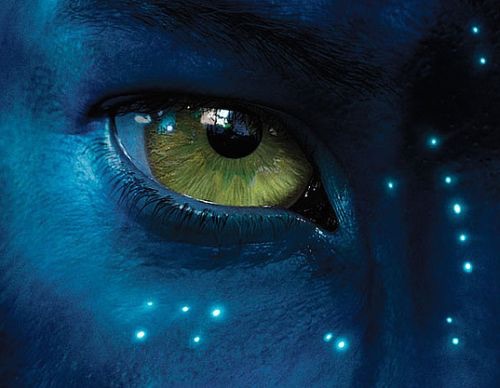
When I was a kid I would routinely project myself into the places depicted in my illustrated books. Now my kids, in addition to the books that they voraciously consume, have the added option of a trip down the road to a darkened hall in which they can strap on a 3D prosthetic imagination and frolic with lithe alien archery virtuosi whilst bathing in wraparound edenic menageries that abound in gorgeous plants. There are, doubtless, debates to be had about whether such omnivorous entertainments stunt or inspire the fledgling imagination but I can’t be bothered to pursue them.

Other commentators have efficiently disparaged ‘Avatar’s GCSE econarrative leaving the way clear for a consideration of the business of ecstatic technologies and how they interlace in this pioneering product. The movie, obviously, has at its narrative hub a prosthetic virtual sensorium that doesn’t deliver movies or out of the body experiences so much as a totally alien point of view, wherein the ‘alien’ is not on another planet but, more or less exotically, can be located in the person sitting next to you. The trainee transpersonators could just as easily plug into each other’s experience as they could into that of an extraterrestrial. Instead of going to the pub with a friend you could, presumably, go in him or her. The question of who would be the designated driver is interesting: if you’re going for a ride in another person then your host is the driver. If you are able to overrule your ride then you are the driver.

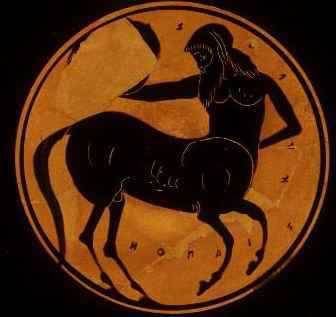
Such a distinction, in ‘Avatar’, is blurred. Our sympathies with the Marine who ‘goes blue’ would be diminished if he seemed to emulate a parasitic brain-worm that munched out his host’s agency. That would be rather suggestive of American imperialism. Instead, paraplegic Jake runs his new alien body but the latter is a genetically engineered copy of a member of the alien race, not an alien who has ever had any experience. The copy is vacant until occupied by the transpersonator, who vitalises the zombie fleshcart. Cameron proposes the jockey mode or, more accurately, the centaur situation, in which the human element is both rider and ridden, driver and passenger. There is no timeshare option whereby two drivers might assume co-pilot status.

Presumably if Hobbits or technopixies had constructed the ecstatic apparatus it would be more readily accepted as empathy facilitation hardware. The software element must be regarded as still in beta, insofar as it can detach then transfer and implant consciousness but not effect the coveted mindmeld that would enable the passenger to sit in the cockpit next to the pilot and be as one with him in a hearts and minds kind of way, as distinct from merely being privileged to see how he does things.

As a cinema of the present offering a 3Dimensionalised window onto the possibilities of ecstatic technology the movie boasts of its own cinematic technofuture, promising a level of immersion that will bundle in the tactile, the olfactory and the gustatory alongside sight and sound. It’s only a matter of time, we are predictably assured. One can sympathise with James Cameron at this point: the cinema screen is such an intractable tissue. It’s actually made of finely punctured, beaded fabric but we cannot travel through the punctures and scamper about. In this respect a prosthetic imagination is a bit of a dumb animal – it can’t make things up. That’s what an artificial intelligence might do. One day (yeah yeah).

When I was a kid I could climb through the frame, turn the corner and make up what I wanted. At the point where the cinema screen empties out – equivalent to Truman (of the eponymous Show) finding that the horizon of his world is a vast cyclorama screen – ‘Avatar’ offers a zipless body transfer when what we really need, especially if we want to migrate to an edenic virtual and never come back, is the reassurance of an authorship that enables us, in our new flesh, to adventure indefinitely.

If the new flesh is merely an armchair with legs then we are at the mercy of book, comic, videogame or feature film parameters. The limitations are considerable: there are moments in ‘Avatar’ when Jake and others are simply unplugged by their human directors, at which point their blue alien giant falls insensibly to the ground. We have reached the limits of cinema. James will probably crack that if he can secure the GDP of a failing state for his next budget.

As a strategy for a life to be conducted within the tyrannical, luxurious embrace of hyperconsumerised capitalism, however, ‘Avatar’s prescription is dandy. Within ten or twenty years the problems of agency will be so pronounced that the objectless, uterine worlds of the gorgeous virtual will be much in demand from those of us seeking a final solution to the onerous business of driving an ever more eviscerated meatbuggy.

03.02.2010

Details Details

It’s important, I think, when you are in the publishing business, to open a piece in a catchy and compelling way, accompanying it, if appropriate, with an arresting image of some sort. So…

I was walking along the road the other day looking at the kerb and I thought “There’s dirt in the dimples in the kerbstones.”

Then I thought: There is never dirt in any niche, crevice or depression in Virtual Reality (a popular idea from the mid 1980s). In ‘real’ Virtual Reality (the one with the goggles) you’re lucky if you get texture, let alone detritus. Even these days, when they can do hair really well (see CGI hair overview here) and texture has come along, nobody does dirt. It’s just too much work. They’ll do it as a laminate, of course, an aspect of surface, as in ‘soiled garment’ or ‘begrimed window’, where it replaces rather than lies upon that to which it adheres.

There is never dirt in any niche, crevice or depression in Virtual Reality (a popular idea from the mid 1980s). In ‘real’ Virtual Reality (the one with the goggles) you’re lucky if you get texture, let alone detritus. Even these days, when they can do hair really well (see CGI hair overview here) and texture has come along, nobody does dirt. It’s just too much work. They’ll do it as a laminate, of course, an aspect of surface, as in ‘soiled garment’ or ‘begrimed window’, where it replaces rather than lies upon that to which it adheres.

The cleanest surfaces on television or, indeed, in their original cinema habitat, are to be found in cartoons, especially the short ones. Visit well-stocked showrooms from John Lewis to Richer Sounds and it is the cartoon channels whose wares radiate from most of the screens on display. Ask any salesperson and they will say this is because cartoons show the TV’s colours at their greatest intensity or brilliance or brightness or vibrancy, whatever it is.

The sulphurous yellows and barely stable reds demonstrate that the television set is really good. At first such a yammering, ferocious palette may induce migraine or the involuntary tightening around the eye of its orbicularis oculi muscles, a sphincter set which acts to narrow the eye opening and close the orbit of the eye. The promise of a dirt-free environment, however, is generally sufficient to accelerate the process of adaptation, after which the nursery colour range will increasingly stand for the world at the same time as making its predecessor – the world – seem rather lacking in gaiety.

The only problem with this is sport. People know what grass should look like and there is a fundamental disparity between cartoon candy settings and those that render the football or cricket pitch credibly. Sport is the most popular TV salesroom display content after cartoons and the grass usually looks okay, suggesting that cartoons shown on the same apparatus may look…what? Lifelike? No – cartoons can’t look lifelike (unless they have CGI hair).

Anyway, behind all this lie the excitements of mania and its surly associate, depression. Take a look at Donald, Daffy, Porky, Sylvester or Stimpy – mood swings de luxe! It is as if the lack of dirt i.e. detail, is the most marvellous lightener of being. Untrammelled by detail, the little fellows experience minimal emotional traction and thus need never tarry in the grey scale. They move, like quantum particles, from light to shade and back without covering the space that is conventionally seen as separating two points.

In such a world transformation is instantaneous. There is no journey to be made, no interim state, you only have to wish. There are two ways of going about it: re-invent yourself or re-invent the world to suit yourself. Most of the difficulties previously associated with these operations have been significantly minimised thanks to the exsanguination of detail. Vampire narratives, from this perspective, offer an examination of the tribulations and rhapsodies that accompany the project either to increase or diminish detail. One bite delivers ecstasy. A few hours later you want another one.

The Seven Foot Knoll Lighthouse contains an extensive exhibit of artifacts and information on lighthouses around the Chesapeake region. Built in 1856, it is one of the 

The cartoon character, in his chronic bi-polarity, reminds us what a drag life is. It really ties you down.

In an earlier post, part of a series, Strength Weekly referred to the notion of the ‘schizogenic society’ laid out by the anti-psychiatrist R.D.Laing. In his stirring and merciless new book ‘Capitalist Realism – is there any alternative?” Mark Fisher (blogging as k-punk) writes about psychological conditions that achieve wide social distribution in the context of particular economic systems:
‘With its ceaseless boom and bust cycles, capitalism is itself fundamentally and irreducibly bi-polar, periodically lurching between hyped-up mania (the irrational experience of ‘bubble thinking’) and depressive come-down. (The term ‘economic depression’ is no accident, of course). To a degree unprecedented in any other social system, capitalism both feeds on and reproduces the moods of populations. Without delirium and confidence, capital could not function.’

Fisher notes that other commentators have argued that ‘schizophrenia is the condition that marks the outer edges of capitalism’ and goes on to assert that, if that is the case then ‘bi-polar disorder is the mental illness proper to the ‘interior’ of capitalism.’

That cartoon characters, in the main, are emblems of capitalised mania and the risks pursuant to unanchored and tractable appetite, is not surprising nor, for that matter, is the notion that efficient communication is predicated on the winnowing out of detail. When I found myself musing on a dirty kerbstone, though, I did wonder if detail is under attrition in another way. In the the current glut of vampire entertainments, for example, analysis has been submitted hither and thither (here, for example) but the genre continues to offer a means of managing something that is not alien so much as enervating. Might this be related in some way to the death of detail?

Despite the rapacious and superhuman energies of the post-prandial vampire, he or she is also closely associated with pallor, listlessness and a suite of symptoms akin to chronic fatigue syndrome. This applies equally to the multiply pierced victim and their fanged immortal exsanguinator. Reduced affect, diminished detail – these effects are not tolerated in the everyday world where, if you give blood in a nice way, as a public-spirited donor, you get a delicious cup of sweet tea to build you up again afterwards. In this instance, however, sweetness is a reward for compliance in a transaction that otherwise leaves you languishing in lassitude.

You’d think that the world that delivers the box-set to your living room, the train timetable to your telephone and a comprehensive history of lighthouses to your computer screen would never run out of toothsome detail. Surely we live in a trainspotter’s paradise as far as detail goes. Even those with genuinely mild or benign attachments to particulars and specifics constantly run the risk of engulfment by small but enticing matters pertaining to their special interests. If bi-polarity is the psychopolitical disorder du jour then the manic could be sated and the depressed uplifted by a dose of train numbers. But it doesn’t work like that, it goes the other way.

That it is time-consuming to add dirt to the picture is accepted as a good enough technical excuse for the box-fresh look of animated imagery. What, however, if dirt were removed from the everyday, goggle-free world – so that this world started to acquire some of the characteristics of a manmade graphic artifact?

Despite the superabundance of data made available by digital technology, it is increasingly the case that paralysis and anxiety are as likely to compound our reactions as an enriching, vitalising celebration of unbounded opportunity. It is the fact of inundation that generates the contemporary bi-polar malaise. It’s the vastness of it. The sheer smothering unmanageability induces either suffocation or ecstasy. There’s too much to dwell on.

It is conceivable, if not provable, that a depressed public consumes less than a manic one. The yearning to alleviate depression is all very well but not much use to the economy if the subject can’t be bothered to get up in the morning. Mania is fun and risks – to the wallet , for instance – tend to be overlooked. Strictly speaking, mania is depression, insofar as it is, by definition, a flame doomed to gutter, for ever and ever. That said, mania is harsh on detail – it doesn’t need it. Depression finds solace in detail, it gives traction on the slopes.

Detail has peaked and is now disappearing. Everything is simpler now. At the moment this is a rather haunting, ugly feeling. Soon it won’t be.

06.01.2010

Peachy: the Grotto

I had derived considerable pleasure from organising and mounting the Text & Image entertainment known as David Gale’s Peachy Coochy Nites, in which a presenter presents to an eager audience a succession of 20 slide images at precisely 20 second intervals, whilst delivering a verbal commentary on each image. The format, invented in 2003 by the architects Astrid Klein and Mark Dytham of Klein Dytham Architecture in order to curtail the tendency of young architects to bang on interminably when given a presentation opportunity, is versatile. It was soon appropriated by artists for whom it served to curtail constructively the tendency of that group to respond at great length to the enquiry ‘What are you up to?’

In my role as curator of the Nites I hunted down a variety of willing presenters – artists, performers, a physicist, a green activist and so forth – the majority of whom found unusual ways of working within the stern constraints. A few days before each monthly Nite I would send out publicity to an ever expanding mailing list. Prior to mailing out I would, necessarily, ascertain the availability of Peachy. I had to satisfy myself that he could be drawn forth. I don’t quite know why I thought of it like that. At first a wisp, then a vapour, then, not uncomfortably, Peachy began to rise from the fumes and assume a presence.

Over the course of my long residency as Curator and CEO of the Peachy Coochy Nite (a text and image entertainment) it was my regular pleasure to prefigure this London-based cult occasion with publicity materials that strive to capture the tone of the diverse and eruptive evenings that reflect human ingenuity under unnatural constraint yet remain refreshingly devoid of spiritual value. Ten days or so before each Nite I despatched to an ever swelling mailing list an informative electronic notelet. These stylistically unadorned and matter-of-fact advertisements have, by dint of their spartan transparency, garnered a covey of keen collectors whose completism I shall now satisfy.

I invite the reader to savour the full archive of both the Peachy Ads and my own Peachy presentations, accessible via the top bar of this page.

05.12.2009

Peachy: Ad: 29.10.09

Friends,
I parked off the A505 near the coppice and made my way into the wood past the pollarded elms. As I moved between the saplings I saw that the high hills hemmed in a forest of huge and hoary oaks – hundreds together and heavy hazel and hawthorn thickets with rags of rough moss wrapped round each limb – while on the bare branches the huddled birds were perched, piping pitifully in the cold.
I spotted Peachy’s pink shorts poking out from an accumulation of humus (not to be confused with the creamy dip originating in the Middle East, made from puréed chickpeas but a brown or black organic substance consisting of partially or wholly decayed vegetable or animal matter that provides nutrients for plants and increases the ability of soil to retain water).
He was not dead. This was how the popular text and image entertainment chose to pass the summer months that he experienced as so much doldrum. It was, if you like, a form of text and image hibernation.
But he must be revived in time for his first outing. He is due to be paraded in London.
“Peachy! Peachy!” I cried, scooping at the mulch.
“What exactly is it?” enquired Peachy, sitting bolt upright, leaves and suchlike falling away from his smooth, translucent skin.
“Gotta go, Peachy! First of the season soon!” I said back to him.
“Do you have the car?” the pampered set of constraints asked.
“What am I? Membership Secretary of the Ramblers Association?” I tersely retorted.
This is what you get:


David Gale’s Peachy Coochy Nites
The projector projects 20 images for precisely 20 seconds each. The Coocheur (or Presenter) speaks for precisely twenty seconds per image. Randomness is discouraged but narrative linearity is not automatically esteemed.
David Gale, having launched a nationwide performance must-have, curates this third season of Peachy Coochy events at ArtsAdmin’s stylish yet reassuring Bar. Each event features six Coocheurs, or Presenters, drawn from many walks of life. Each Coocheur will compose a verbal response to 20 images of their choice. Each presentation lasts 6 minutes and 40 seconds. There will be gaps between presentations for drinking and light conversation.
David, something of a Black Belt in these matters, will both compere and present the components that may not be readily assembled.
This is what a typical person thinks of the Nite:
“Having seen the Nite I felt exhilarated yet destabilised, unable to return home, to behave as before.”
Malcolm (07/08/09)
Peachy Coochy Nites subscribes to the the National Belief System and is therefore committed to the provision of a wide range of contributors such as the miner, the major, the private individual, the self-made woman, the exhibitor, the moderator, the concierge.
The first Peachy Coochy Nite of the new season will be held, as usual, in the Bar at Toynbee Studios on October 29th at 7.30 pm. Tickets £5.00. Booking advised but walk up welcome.
more details here:
http://www.artsadmin.co.uk/projects/project.php?id=211
and a map here:
http://www.artsadmin.co.uk/contacts/
The Guardian catches some cooch:
http://www.guardian.co.uk/stage/theatreblog/2008/nov/17/theatre-peachy-coochy-performance-art
Some of you, pleased by the Nite, may wish to compose your own presentations. See me afterwards.
The Nites will run on the last Thursday of each month. You will be notified.
all the best
David