Alice in Progress

The website (from 2011) mentioned below is extinct but some of its contents will be found in ensuing Strength Weekly Posts.

I’m working on a large-scale outdoor show called ‘Dining with Alice’, which opens at the Norfolk & Norwich Festival in May. The show places its patrons in a country house garden where they eat a meal whilst encountering characters from Alice in Wonderland. It was first presented at the Salisbury Festival in 1999 and is being extensively refurbished for its imminent Spring revival. Directed by Hilary Westlake, with text by Strength Weekly’s CEO, writer David Gale, music by Frank Millward and produced by Artichoke (the company that brought ‘The Sultan’s Elephant’ to London), it can be examined here. On the dedicated ‘Dining with Alice’ website I’m writing a regular blog called ‘Ruminations’ and a column called ‘Aliciana’ which collects quotes from hither and thither that illustrate some of the debates around the Carroll/Dodgson/Alice nexus.


18.03.2011

The Show Must Go On

In the course of the curtain call for ‘A Dog’s Heart’ – Simon McBurney’s sellout ENO opera based on a Bulgakov novel – the chorus performers take their massed bow first, followed by more prominent performers and so on. One of these latter, who has a small part as a stout well-to-do lady, crosses the stage in her character walk then, pausing to take the bow, hitches up her skirt hem a few inches and drops it, as if coquettishly but wishfully advertising her sexagenarian sexiness. A panto moment. But this is the curtain call. The show is actually over.

A few performers later, the soprano playing the maid Zina prefaces her bow with a couple of wacky calisthenic moves that have earlier served to signal her character’s ditziness. Finally, the star of the show, the tenor Peter Hoare, having played Sharikov the dog-man, scampers on and pretends to lunge doggily at the performer next to him in the lineup.

Why is the show still going on? The idea is that when you reach the last page of the script or, in this case, the score, you stop. There is a lighting change which facilitates a clear view of the performers’ faces and bodies, which have been divested of all the qualities of their fictional roles. If we are pleased we clap and, by so doing, please the performers. Then people leave the theatre.

It’s even worse at ‘Billy Elliot’. At the end the lights change, the cast takes its bows but then the entire troupe suddenly becomes inexplicably loveable, regardless of their erstwhile showtime qualities. This is not, however, an opportunity to glimpse their unadorned workaday charm. They have assumed new characters! Who proceed to deliver a right old knees-up replete with teeth, smiles and the obligatory ‘nimble turn’ executed by the oldest member of the cast!

Let it go, why don’t you? The curtain call has an important ritual function. It reseals the envelope between a fictional world and the everyday, thereby contributing to the reinforcement of the psychological skill known as ‘reality testing’. We must assume, given the leakages I have described, that the premium placed on such skills has been significantly reduced. We may now feel safer in imagining that Zina the Maid is downing a glass of vodka in The Salisbury in St Martins Lane, just up from the Coliseum, before returning to her flat in either Maida Vale or below stairs in her employer’s house in Moscow, depending on the levels of hybridity in which we choose to immerse these homunculi who hail simultaneously from fiction, our imaginations and the lives of everyday theatre folk.

It’s a harsh thing, the end of a show. As post-carnival suicide figures in Brazil attest, life can suddenly seem even drabber when the house lights come up. The possibility of magically maintaining a fiction in the eye of the hurricane of the everyday is detectable in fairy-tales wherein the woodcutter who helped out a disadvantaged goblin will be given three wishes, only to squander them on a succession of slapup feeds. As Jack Zipes has pointed out, the benighted mortals of the forest do not wish for social change that might alleviate their feudal misery because they cannot conceive of such a scenario, even in their most magical dreams. When a show with its heart in a progressive place, such as ‘Billy Elliot’, is hijacked by the sentimentality of West End actors who refuse to go home then not only is everyday life betrayed but it is as if the political aspirations embedded in the work are actuated and thereby instantly depotentiated. The distance between fiction and reality is collapsed thereby neutralising any leverage inhering in the fiction.

Chastising the actors for their indulgence is beside the point. It may be that they sense that their refusal of ritual will be warmly received in a climate in which the only defence against a predatory reality lies in chronic, concerted fabulation.

03.12.2010

My Sweet Lord

Having muted the television in order to avoid contracting depression from a very popular programme, I couldn’t help noticing, as I peeked over the rim of the newspaper, that there was something compellingly awful about the clutch of young suits and suitinas either sitting at tables or running about. There is always something awful in programmes about success, and the quality of the awfulness never varies, so I should have known better. The table episodes in ‘The Apprentice’, as everyone who owns a television knows, feature Sugar and two lieutenants on one side and, on the other side, suits who have abandoned all distinctiveness in the name of being similar to their peers, only more so.

It occurred to me that when I was a schoolboy, back in a time when most schoolkids wore uniforms, my friends and I experienced a strong need to distinguish ourselves from the pack. Undeterred by the fact that other pack members were also thus motivated, the members of my group applied themselves to tweaking the uniforms that made them appear uniform.
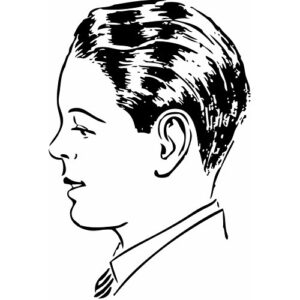
Ties were knotted inventively and the knots positioned in unusual relationships to the top button of the white shirt. Caps were subjected to distress in ways that costume assistants in movies would respect. Trousers were purchased (by your mother) with less than 16 inch bottoms (your mother was told the limit was 14). Shoes had to Italianise to a point. The look was scruffy with patches of style. Models for the look were Teddy Boys, Tony Curtis, Rockers, Elvis, the hairstyles of Hollywood Romans, Mods, Beats and Artists. Middle class boys, such as myself, were drawn to certain elements of working class grooming, such as hair cream, but found our mothers intransigent in their resistance to the pompadour.

We were, of course, cleaving to convention but our conventions were oppositional. Sugar’s suits, on the other hand, are intent on practising a mode of reverse evolution so radical that one wonders if sheer intention could actually effect parthenogenetic regressive restructuring at a molecular level. A key strategy on display appears to be based on the principle that if a rival makes an effective or ineffective move of some sort – it doesn’t matter which – then his associates will exert a form of homeostatic adjustment designed to return the system to a state of equilbrium. Instances of dissident idiosyncrasy that might be viewed as potentially and constructively state-changing are efficiently suffocated in this scheme. The errant suit is not ejected, he is simply divested of his difference. This is not competition.

What’s odd here is that all the participants and ourselves have come to believe that the spectacle is, in fact, based on principles of competition and is therefore exciting. In practice, however, the emanations of the patriarchy are so overwhelming that the suits have prioritised becoming like each other as a means of achieving what is deeply craved: becoming like Lord Sugar. Lord Sugar will note their capacity to be like each other and will understand that, with a modicum of realignment, they can become like him. They will, of course, having achieved this condition, be obedient. The least competitive will be the most powerful if he can suffocate competition in the name of the persistence of the patriarch. This makes for better television than watching silly competitions, even if the event is blazoned as contest essentialised.

It will be argued that I am failing to notice that every single programme features barely concealed ambition, anger and terror in addition to blatant and incontinent self-promotion. My point is that the vocabulary of the combat is exceptionally small and decreases steadily as its founding ideology becomes increasingly pervasive. Although behaviours may seem florid – the attempts to suppress strong unteamly emotion at a facial level are certainly compelling – they are drawn from such an impoverished stock that their degree of difference, even when counterpointed, is minimal. Border skirmishes are the order of the day, fully mobilised wars are relegated to video games.

The watery-eyed, puff-cheeked, sidelong-glancing novices are actually much more accomplished team-members than they privately would wish to concede. They share a passionate allegiance to the process of abjection by self-promotion. The latter comprises an incantatory series of profoundly abasing assertions of their value in the baldest terms. This is the equivalent of writing your own references. Once the principle of self-commendation is accepted, difference is made obsolete and collapses. This style of self-abasement is clearly intoxicating insofar as the practitioners are able to overlook its resemblance to the canine practice of offering the arse up for sniffing.

31.10. 2010

With Vacant Possession

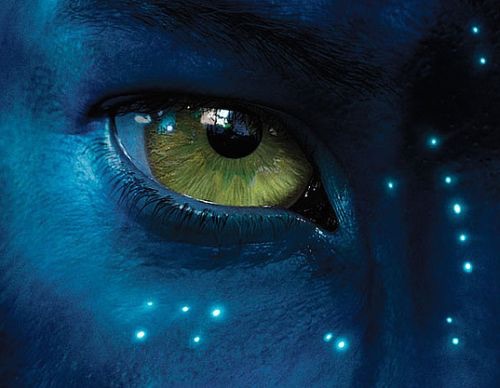
When I was a kid I would routinely project myself into the places depicted in my illustrated books. Now my kids, in addition to the books that they voraciously consume, have the added option of a trip down the road to a darkened hall in which they can strap on a 3D prosthetic imagination and frolic with lithe alien archery virtuosi whilst bathing in wraparound edenic menageries that abound in gorgeous plants. There are, doubtless, debates to be had about whether such omnivorous entertainments stunt or inspire the fledgling imagination but I can’t be bothered to pursue them.

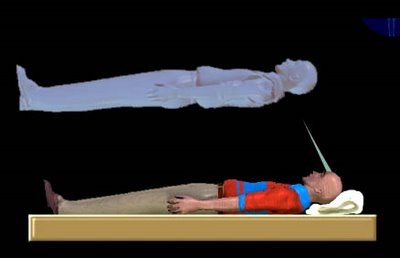
Other commentators have efficiently disparaged ‘Avatar’s GCSE econarrative leaving the way clear for a consideration of the business of ecstatic technologies and how they interlace in this pioneering product. The movie, obviously, has at its narrative hub a prosthetic virtual sensorium that doesn’t deliver movies or out of the body experiences so much as a totally alien point of view, wherein the ‘alien’ is not on another planet but, more or less exotically, can be located in the person sitting next to you. The trainee transpersonators could just as easily plug into each other’s experience as they could into that of an extraterrestrial. Instead of going to the pub with a friend you could, presumably, go in him or her. The question of who would be the designated driver is interesting: if you’re going for a ride in another person then your host is the driver. If you are able to overrule your ride then you are the driver.

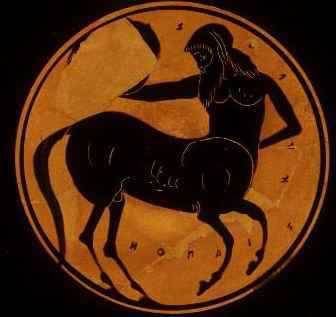
Such a distinction, in ‘Avatar’, is blurred. Our sympathies with the Marine who ‘goes blue’ would be diminished if he seemed to emulate a parasitic brain-worm that munched out his host’s agency. That would be rather suggestive of American imperialism. Instead, paraplegic Jake runs his new alien body but the latter is a genetically engineered copy of a member of the alien race, not an alien who has ever had any experience. The copy is vacant until occupied by the transpersonator, who vitalises the zombie fleshcart. Cameron proposes the jockey mode or, more accurately, the centaur situation, in which the human element is both rider and ridden, driver and passenger. There is no timeshare option whereby two drivers might assume co-pilot status.

Presumably if Hobbits or technopixies had constructed the ecstatic apparatus it would be more readily accepted as empathy facilitation hardware. The software element must be regarded as still in beta, insofar as it can detach then transfer and implant consciousness but not effect the coveted mindmeld that would enable the passenger to sit in the cockpit next to the pilot and be as one with him in a hearts and minds kind of way, as distinct from merely being privileged to see how he does things.

As a cinema of the present offering a 3Dimensionalised window onto the possibilities of ecstatic technology the movie boasts of its own cinematic technofuture, promising a level of immersion that will bundle in the tactile, the olfactory and the gustatory alongside sight and sound. It’s only a matter of time, we are predictably assured. One can sympathise with James Cameron at this point: the cinema screen is such an intractable tissue. It’s actually made of finely punctured, beaded fabric but we cannot travel through the punctures and scamper about. In this respect a prosthetic imagination is a bit of a dumb animal – it can’t make things up. That’s what an artificial intelligence might do. One day (yeah yeah).

When I was a kid I could climb through the frame, turn the corner and make up what I wanted. At the point where the cinema screen empties out – equivalent to Truman (of the eponymous Show) finding that the horizon of his world is a vast cyclorama screen – ‘Avatar’ offers a zipless body transfer when what we really need, especially if we want to migrate to an edenic virtual and never come back, is the reassurance of an authorship that enables us, in our new flesh, to adventure indefinitely.

If the new flesh is merely an armchair with legs then we are at the mercy of book, comic, videogame or feature film parameters. The limitations are considerable: there are moments in ‘Avatar’ when Jake and others are simply unplugged by their human directors, at which point their blue alien giant falls insensibly to the ground. We have reached the limits of cinema. James will probably crack that if he can secure the GDP of a failing state for his next budget.

As a strategy for a life to be conducted within the tyrannical, luxurious embrace of hyperconsumerised capitalism, however, ‘Avatar’s prescription is dandy. Within ten or twenty years the problems of agency will be so pronounced that the objectless, uterine worlds of the gorgeous virtual will be much in demand from those of us seeking a final solution to the onerous business of driving an ever more eviscerated meatbuggy.

03.02.2010

Details Details

It’s important, I think, when you are in the publishing business, to open a piece in a catchy and compelling way, accompanying it, if appropriate, with an arresting image of some sort. So…

I was walking along the road the other day looking at the kerb and I thought “There’s dirt in the dimples in the kerbstones.”

Then I thought: There is never dirt in any niche, crevice or depression in Virtual Reality (a popular idea from the mid 1980s). In ‘real’ Virtual Reality (the one with the goggles) you’re lucky if you get texture, let alone detritus. Even these days, when they can do hair really well (see CGI hair overview here) and texture has come along, nobody does dirt. It’s just too much work. They’ll do it as a laminate, of course, an aspect of surface, as in ‘soiled garment’ or ‘begrimed window’, where it replaces rather than lies upon that to which it adheres.

There is never dirt in any niche, crevice or depression in Virtual Reality (a popular idea from the mid 1980s). In ‘real’ Virtual Reality (the one with the goggles) you’re lucky if you get texture, let alone detritus. Even these days, when they can do hair really well (see CGI hair overview here) and texture has come along, nobody does dirt. It’s just too much work. They’ll do it as a laminate, of course, an aspect of surface, as in ‘soiled garment’ or ‘begrimed window’, where it replaces rather than lies upon that to which it adheres.

The cleanest surfaces on television or, indeed, in their original cinema habitat, are to be found in cartoons, especially the short ones. Visit well-stocked showrooms from John Lewis to Richer Sounds and it is the cartoon channels whose wares radiate from most of the screens on display. Ask any salesperson and they will say this is because cartoons show the TV’s colours at their greatest intensity or brilliance or brightness or vibrancy, whatever it is.

The sulphurous yellows and barely stable reds demonstrate that the television set is really good. At first such a yammering, ferocious palette may induce migraine or the involuntary tightening around the eye of its orbicularis oculi muscles, a sphincter set which acts to narrow the eye opening and close the orbit of the eye. The promise of a dirt-free environment, however, is generally sufficient to accelerate the process of adaptation, after which the nursery colour range will increasingly stand for the world at the same time as making its predecessor – the world – seem rather lacking in gaiety.

The only problem with this is sport. People know what grass should look like and there is a fundamental disparity between cartoon candy settings and those that render the football or cricket pitch credibly. Sport is the most popular TV salesroom display content after cartoons and the grass usually looks okay, suggesting that cartoons shown on the same apparatus may look…what? Lifelike? No – cartoons can’t look lifelike (unless they have CGI hair).

Anyway, behind all this lie the excitements of mania and its surly associate, depression. Take a look at Donald, Daffy, Porky, Sylvester or Stimpy – mood swings de luxe! It is as if the lack of dirt i.e. detail, is the most marvellous lightener of being. Untrammelled by detail, the little fellows experience minimal emotional traction and thus need never tarry in the grey scale. They move, like quantum particles, from light to shade and back without covering the space that is conventionally seen as separating two points.

In such a world transformation is instantaneous. There is no journey to be made, no interim state, you only have to wish. There are two ways of going about it: re-invent yourself or re-invent the world to suit yourself. Most of the difficulties previously associated with these operations have been significantly minimised thanks to the exsanguination of detail. Vampire narratives, from this perspective, offer an examination of the tribulations and rhapsodies that accompany the project either to increase or diminish detail. One bite delivers ecstasy. A few hours later you want another one.

The Seven Foot Knoll Lighthouse contains an extensive exhibit of artifacts and information on lighthouses around the Chesapeake region. Built in 1856, it is one of the 

The cartoon character, in his chronic bi-polarity, reminds us what a drag life is. It really ties you down.

In an earlier post, part of a series, Strength Weekly referred to the notion of the ‘schizogenic society’ laid out by the anti-psychiatrist R.D.Laing. In his stirring and merciless new book ‘Capitalist Realism – is there any alternative?” Mark Fisher (blogging as k-punk) writes about psychological conditions that achieve wide social distribution in the context of particular economic systems:
‘With its ceaseless boom and bust cycles, capitalism is itself fundamentally and irreducibly bi-polar, periodically lurching between hyped-up mania (the irrational experience of ‘bubble thinking’) and depressive come-down. (The term ‘economic depression’ is no accident, of course). To a degree unprecedented in any other social system, capitalism both feeds on and reproduces the moods of populations. Without delirium and confidence, capital could not function.’

Fisher notes that other commentators have argued that ‘schizophrenia is the condition that marks the outer edges of capitalism’ and goes on to assert that, if that is the case then ‘bi-polar disorder is the mental illness proper to the ‘interior’ of capitalism.’

That cartoon characters, in the main, are emblems of capitalised mania and the risks pursuant to unanchored and tractable appetite, is not surprising nor, for that matter, is the notion that efficient communication is predicated on the winnowing out of detail. When I found myself musing on a dirty kerbstone, though, I did wonder if detail is under attrition in another way. In the the current glut of vampire entertainments, for example, analysis has been submitted hither and thither (here, for example) but the genre continues to offer a means of managing something that is not alien so much as enervating. Might this be related in some way to the death of detail?

Despite the rapacious and superhuman energies of the post-prandial vampire, he or she is also closely associated with pallor, listlessness and a suite of symptoms akin to chronic fatigue syndrome. This applies equally to the multiply pierced victim and their fanged immortal exsanguinator. Reduced affect, diminished detail – these effects are not tolerated in the everyday world where, if you give blood in a nice way, as a public-spirited donor, you get a delicious cup of sweet tea to build you up again afterwards. In this instance, however, sweetness is a reward for compliance in a transaction that otherwise leaves you languishing in lassitude.

You’d think that the world that delivers the box-set to your living room, the train timetable to your telephone and a comprehensive history of lighthouses to your computer screen would never run out of toothsome detail. Surely we live in a trainspotter’s paradise as far as detail goes. Even those with genuinely mild or benign attachments to particulars and specifics constantly run the risk of engulfment by small but enticing matters pertaining to their special interests. If bi-polarity is the psychopolitical disorder du jour then the manic could be sated and the depressed uplifted by a dose of train numbers. But it doesn’t work like that, it goes the other way.

That it is time-consuming to add dirt to the picture is accepted as a good enough technical excuse for the box-fresh look of animated imagery. What, however, if dirt were removed from the everyday, goggle-free world – so that this world started to acquire some of the characteristics of a manmade graphic artifact?

Despite the superabundance of data made available by digital technology, it is increasingly the case that paralysis and anxiety are as likely to compound our reactions as an enriching, vitalising celebration of unbounded opportunity. It is the fact of inundation that generates the contemporary bi-polar malaise. It’s the vastness of it. The sheer smothering unmanageability induces either suffocation or ecstasy. There’s too much to dwell on.

It is conceivable, if not provable, that a depressed public consumes less than a manic one. The yearning to alleviate depression is all very well but not much use to the economy if the subject can’t be bothered to get up in the morning. Mania is fun and risks – to the wallet , for instance – tend to be overlooked. Strictly speaking, mania is depression, insofar as it is, by definition, a flame doomed to gutter, for ever and ever. That said, mania is harsh on detail – it doesn’t need it. Depression finds solace in detail, it gives traction on the slopes.

Detail has peaked and is now disappearing. Everything is simpler now. At the moment this is a rather haunting, ugly feeling. Soon it won’t be.

06.01.2010

Commercial

This is one of the images printed on stout card for the Dash Dash Dash flyers then placed around in places where people who like that sort of thing go.

The flyer, carded, with deets.


Hinting at the tempestuous, an image used  for Dash Dash Dash programmes.

The Tempest in situ. Programme for Ep 2 of Dash Dash Dash the Series.


22.10.2009