David Gale’s Peachy Coochy Nites #6

20 slides are each projected for 20 seconds and spoken to for the same period, no more, no less. The script for one of these precision-based presentations is found below.

Season 1: PC#6

Previously on Peachy Coochy: as a result of visiting Birmingham with the intention of shagging  power ballad singer Bonnie Tyler I had succeeded in transforming from a packing crate into the singer Barry Manilow. For a while it was good to be Barry. The Las Vegas Hilton stocked many fine wines and gourmet repasts while the ensuite facilities were beyond reproach.

I made many friends and took part in complicated sexual experiences . In the street I frequently encountered people who were anxious to talk with me and touch me. I met several people who wanted to be me and a few who said that they were me. I asked a man who said he was me if he was happy – hoping to gain some insight into my condition. He replied that he was unsure of himself.

But I had everything, how could I be so unsure? My new album ‘Beautiful Ballads and Love Songs’ had gone double platinum and I had enjoyed capacity attendances at  London’s O2 Arena last December. Yes, my nose was unusually big but this could not account for my abiding sense that I was not the same as other people. Something was missing.

When I spoke with my friends they were at a loss. They kept saying that I was at the pinnacle of my career and could want for nothing. I introduced them to the man who said he was me to see if he had some other perspective to offer. His name was Barry, of course, but when pressed he said it was Frank. This, in turn, he told me, was short for Francium.

It transpired that Francium is among the rarest elements listed in the periodic table. It is estimated that at any one time there are no more than twenty atoms of it present in the world. As a first name it is being taken up increasingly in the countries of the west, where, one might hypothesize, the attrition of identity has acquired such momentum that the subject does not feel unique so much as invisible.


Frank explained that Francium has a half-life of only twentytwo minutes, after which it decays into the halogen Astatine, of which, it is estimated, less than one ounce exists in the Earth’s crust. This was also the name of his sister, an ethereal creature who warned us that, in eight and a half hours, she too would be gone.

“Are you not sad, Frank and Astatine, that you share with the Mayfly the briefest of lives, in which you are constantly flying, never eating, then dying? Frank et Astatine, est-ce-que vous n’etes pas tristes?” Astatine spoke softly, stroking my sleeve with her cold, translucent hand, “Non, Barry. We are not sad.”

“It is not widely realised that the mayfly spends up to two years as a larva, during which period it eats algae and other microscopic animals. By the time the mayfly transforms into an adult, it has already lived a full life, by insect standards.” Frank interrupted Astatine. “Barry, I have only a few seconds left. Promise me that I can be you.”


“Even Astatine,” said Frank, “cannot comprehend what it is to never land, to be in constant decay,  to turn inexorably into one’s sister every few minutes. That is why I chose you, I wanted to live outside time, as you do, Barry. If I cannot be you I will be a brick. At least it has constancy.” I heard myself screaming: “No, Frank!”

“Do not choose a brick! Understand that while I am Barry Manilow now,  I was once a packing case! You may even have put things in me! No, Frank,  that is not the way to go.”

“But Barry,” Frank cried, “what can we do? What is constant? Are we doomed to endless wandering?” Suddenly I knew what I must do. All the imagery with which I had sustained myself fell away. In that same moment Frank vanished.

Johnny Depp was staying a few doors down from my suite in the Hilton. “Barry, yo! Come on in!” he said warmly.  “Johnny, I am not Barry Manilow, my real name is David Gale and I am on a quest.” “Hey, whatever,” Johnny said, “I’m not really Willy Wonka! Do you love wine?  I have some from France here. Claret. Goes well with cheese.”

The truth that Johnny then told me was shocking, as I had expected. “You know why you’re not happy? Why you feel different than everybody?” I shook my head, “No. No, I don’t.” Johnny gazed at me piercingly. I realised that his eyes were brown,  like mine. We were, in fact,  almost lookalikes. Perhaps… “Don’t go there!” Johnny said. “It’s a dead end. You know it is.”

“It’s because you have never killed anybody.” I almost dropped my glass. “What? What do you mean?” “Did you see that movie?  ‘The Truman Show’?” “Yes, I did. Why?” “The way that whole  thing was going on and he knew nothing about it?” “Yeah…” “Okay. It’s the same. Everybody has killed somebody. That’s how they do it. That’s their secret.”

I felt sick. The room swirled and melted around me. “Does it have to be someone you like?” I stuttered. “No,” said Johnny. “That’s not important. It should be a mindless act, firing into the crowd.” “Does there have to be a crowd?” I asked. “That’s just a detail – could be anywhere.”

I entered the Maghreb at Tangier and started out along the coast.  I came across two men in their pants and one in a suit. They said they were,  from left to right, Peter Orlovsky,  Jack Kerouac and William Burroughs. “I’m not gay,” I said. “Relax!” Burroughs said. “This is an international zone. You’re free to do what you want or not do what you don’t want.”

“I’m looking for lonely people,” I explained. “Are there any here?” Kerouac said “You’d be better off further down in Algeria. People walk alone on the beach there. You can hitch-hike. You can kill people.” I was taken aback, “How did you know?” Jack said “It’s just something you have to do. Their death fills you up.”

I walked to Tetouan,  crossed the border at Bab el Assa to Ghazaouet and approached Oran. My gun was hot in my pocket. I wondered if the man I would shoot had shot a man. I supposed he had because everyone knew – I was the only one who didn’t. I hadn’t realised. Now I understood. You  are born empty. You must fill yourself with life. Life is trapped in the other person’s body.

I took his credit cards and his passport. He was just some guy. Connolly. Not anybody I knew.  I left him there. It didn’t happen immediately, the feeling. I met a beautiful woman.  I saw a chocolate cake. I found a lot of money on the ground by a bush. I was awarded an international prize. My passport photo was sharper and clearer.


I was asked advice. A car was outside my house. The car was red. I had a suit. I was groomed. I spoke calmly. I went through the gears. Warmth came to me from people. I went to the meadows and the commons and walked about. Children. Animals and birds. The sky.

Now the river. Now the pond. On the other side of the water I saw Celine Dion, Jennifer Rush and Bonnie Tyler. They were wearing white singing dresses. They were waving.  I no longer wanted to shag them. They were my friends. I valued them. I went over to them. Astatine held my hand.

David Gale’s Peachy Coochy Nites #5

20 slides are each projected for 20 seconds and spoken to for the same period, no more, no less. The script for one of these precision-based presentations is found below.

Season 1: PC#5

Previously on Peachy Coochy: I had been born as a block of wood and had developed into a packing crate thanks to some magical  beings and some clowns. I was full of glass animals and had been placed on a table where anyone could see me. I knew, however, that there was still much to do. There were things I needed. I was still not as others, despite the animals inside me.

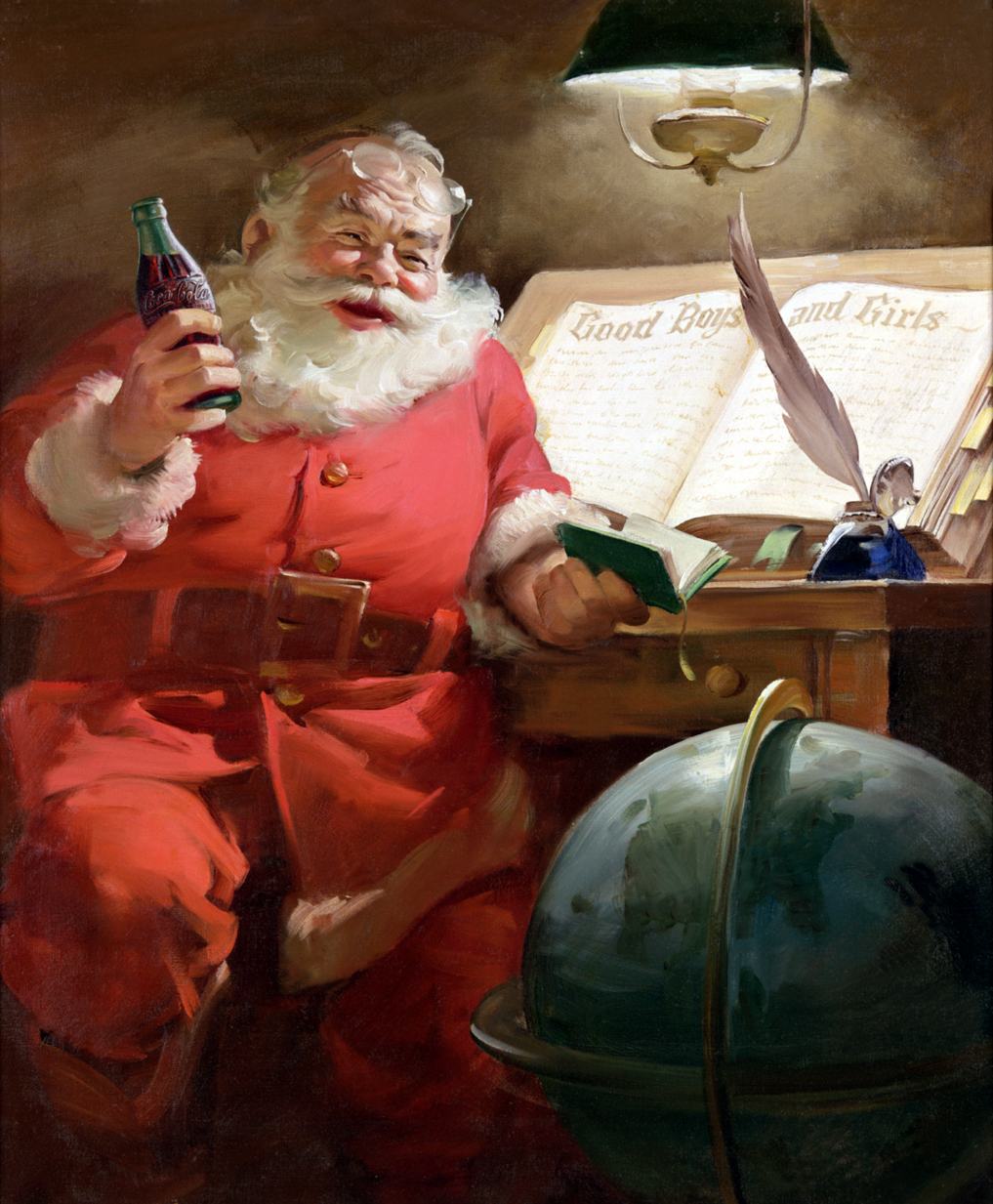
“Strictly speaking, I’m off duty,” said Santa. “And the trouble is,” he said, “You look like a present.” “Give me a person, then,” I responded. “We don’t normally give people,” said Santa. “Our speciality is gifts for people – we have a massive warehousing operation maintained by state of the art inventory management systems. Tell you what – you can poke about in the skips if you want.”

“No way,” I said to the doll. “Been there. Done it.” “I’ve had a lot of women in my time,” it croaked.   “In your dreams, faggot!” I shouted. Then I apologised. “I’m sorry, I meant that strictly in the sense of ‘a bundle of sticks’ not…you know…” “That’s bad enough!” said the doll. “That’s the same as calling a human a ‘spaz’ or something.”

I was getting nowhere. But then the doll brightened up. “I’ve shagged Bonnie Tyler,” it declared. An electric bolt shot through my glass animals. How did this broken creature know about my consuming interest in the raspy-voiced Welsh balladeer with her quiver full of hits such as ‘Lost in France’ (1976), ‘It’s a Heartache’ (1977) and ‘Total Eclipse of the Heart’ (1983)?

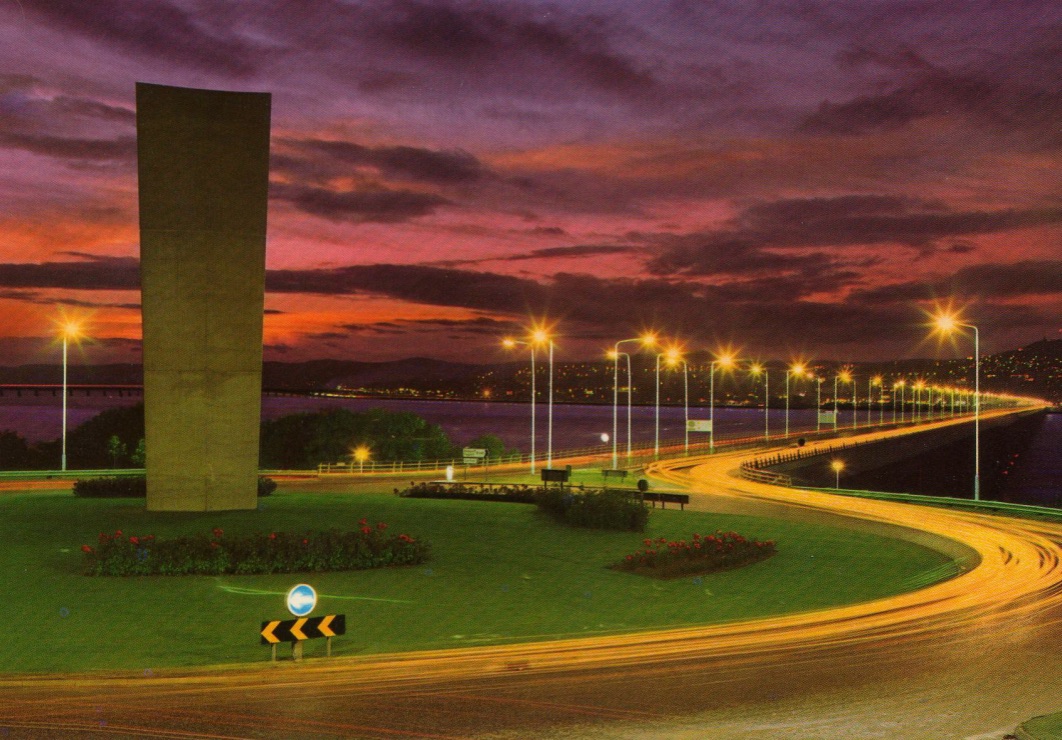
I started to shiver and was seized with wave after wave of memories that I scarcely recognised. I found myself in the air above an impossible swirl of roads, gazing down on a scene of ceaseless movement. How could all of these carriageways lead to places? From what place were they streaming? I stretched out my arms and swooped down.

It was Birmingham. I hadn’t been there for decades. I remembered being there in the 70s. I was putting on shows there, with a group of people. I couldn’t believe what a shithole the city was. I had seen shitholes in my time but this was the clear winner. Ugly wherever you looked. Not a single vista that could even be described as tolerable.

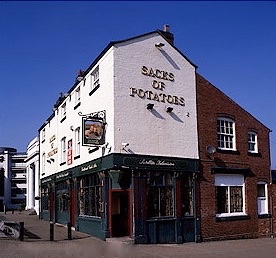
Sometimes, while kicking my heels before shows, I would walk out of the Arts Centre to a pub nearby, possibly called the Sack of Potatoes. I came to think of it as the Sack of Shit. It actually wasn’t all that bad. You could sit outside on a bench and gaze across at the unbelievable mess of flyovers and roundabouts. You could imagine,  for just a few minutes, that you were flying above it.

Everywhere was blue light. It was the light of clubs and night. The light of mournful excitement and dark orange foods. There are travellers in the bar with notebooks. A woman glances. There’s a dog there. You wouldn’t expect a dog. Is it a Black Lab? Under the light?

That hotel on the Belgian coast. A seaside resort. Long blank beaches. It’s actually called Blankenberge. Yes. Umbrellas under dead sky. What shall we do? Let’s weigh ourselves. Where’s the weighing machine?  At the railway station. I daren’t go there – I’d jump on a fucking train.

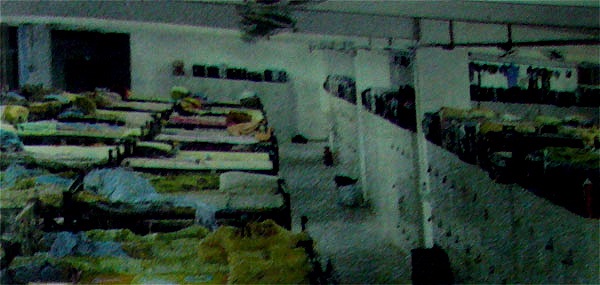
I was up in Birmingham again for some reason. I had to stay the night in a cheap hotel. Instead of rooms they had walls which stopped short of the floor and ceiling. Partitions. I stood on my bed at night and looked across the tops of the partitions. Under a blue light men and women were sleeping; sighing and shifting. I don’t know why I was there. I had no reason to be.

“I shagged her,” said the doll. “I fucking gave her one.”  I said “I don’t believe you. Bonnie Tyler has her pick of men in jackets. She would not go with something that was recently a tree.” The doll said “You know so little. The thing about Bonnie is the balance in her between male and female elements. That’s her appeal.”

I wondered if Bonnie was still in Birmingham. I wanted to find her and give her one. But would she shag a crate? I liked the firmness in her, perhaps she, in turn, would see that, in my own way, I had both rigidity and capacity. I began to think about the actual mechanics of our congress. How would I caress Bonnie? How would I remove her various outfits?

How would she negotiate my unusual proportions? Perhaps she could get inside me. I thought of her pressing upon my firm ribs with her buttocks, gripping my upper perimeter with her manicured hands, her mauve nails drumming on my rectangular rim. She would feel safe within me. At night-time she would whisper “Every woman needs a crate.”

I realised I was deluding myself. I needed to talk to someone who could remember what having a proper body was like. The man was insubstantial in many ways. I was afraid that he was dead. He assured me otherwise. He explained that he had been killed by lethal injection but that at the point of termination he had jumped out of his skin. He frequented warehouses, giving counsel to distressed packaging.

He recommended a psychiatrist who had tended him before his termination. The psychiatrist had qualities of simply being there that I admired. He was simply there. He sat opposite me in his neat but neutral office. I felt that he could see inside me. He suggested that I describe to him my situation as I saw it. I began to speak.

​

Given the existence as uttered forth in the public works of Puncher and Wattmann of a personal God quaquaquaqua with white beard quaquaquaqua outside time without extension who from the heights of divine apathia divine athambia divine aphasia loves us dearly with some exceptions for reasons unknown but time will tell…

…and suffers like the divine Miranda with those who for reasons unknown but time will tell are plunged in torment plunged in fire whose fire flames if that continues and who can doubt it will fire the firmament that is to say blast hell to heaven so blue still and calm so calm with a calm which even though intermittent is better than nothing but not so fast

“You’re lucky,” said the psychiatrist. “Thanks to modern mind science I can help you change in 60 seconds starting now. First you must realise that the reason for your sadness is related to negative images and thought patterns that have become stuck in your head. We can replace these images with positive ones that will lead you to embrace life to its deep hilt and suck upon its rich teat.”

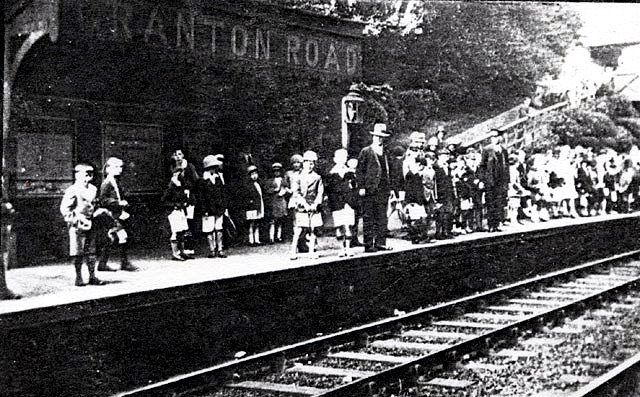
I took the train from Birmingham New Street. As we passed through Granton Road I saw Bonnie. She looked so tired. A tired little girl. I wound the window down and started to sing. She looked across the track at me. I felt that although she could hear my singing I was moving further and further away from her. I wondered why she didn’t wave.

As Bonnie became a dot I started to point at her. It was both a goodbye and a hello. I had joined her but I had left her. I was a singer now. I could move others like she had moved me in Birmingham, a blonde in the blue lights, singing for the people sighing, the people wandering through the dead, drab streets. I had changed my ideas. I was a new person.

Peter & Susan at Six Panels

I have received up to 900 mails and letters concerning Peter and Susan. They say We would be interested to learn more of their lives and hopes, basically what they are like. I can do this. It is best to start a short while ago.
Peter and Susan were, as far as they could tell, immersed in a book. For example, when they came across Lily she mentioned that she had been on holiday in the Mediterranean only the other day and had enjoyed reading a book in which they were mentioned. It is not clear if they were characters in that book, which was a fiction. It might have just been their names. Peter and Susan would have listened to Lily and taken note of this. Which is probably why it came about – their interest in people in books. Their immersion in them.

Peter and Susan went to see Peggy McFarrell’s “A Not So Final Curtain” with its accounts of theatre life and those who lived it. After the opening within this show of (the fictional) Dan Mulcahy’s (fictional) show “Dappled” there was an interval and Peter and Susan, in the Circle Bar, bumped into some friends and discussed the play so far. Eloise, one of the friends, said that the play was quite Pirandelloesque. Peter didn’t know what that meant so he asked Eloise to explain. It was after this Italian playwright, Pirandello, who wrote a famous play in which the characters were in an unfinished play and were wandering around trying to find its author. Peter said “Perhaps it wasn’t a very good play.”

Even so it started them thinking. Perhaps they could take the initiative more. But although they discussed how they might do this, every time they determined to ‘up sticks’ or ‘do something about it‘ Peter would get a headache and Susan would fall asleep.

But ‘Peter and Susan’; ‘Peter and Susan Strike Out’; ‘Peter & Susan Spend a Day at Amper Sands’, ‘Peter and Susan start to feel somehow not really real, substantial or present at all ’ – these were all things that happened to them. And more or less, these things ended properly. Things were tied up. Except, as you might expect, for those situations in which open-ended anxious feelings were closed down without resolution as in the fourth volume as in the list above. They would be closed down because Peter and Susan did not enjoy the fatigues, the staring, the flaccid restlessness, the intermittent sense of a lack of project. You and I might think they should suck it up isn’t this just what it’s like? but they thought at times that you should press it back down and at other times they thought that it should be possible to let it flow out – how bad could that be?

In “Peter and Susan go to the Eiger” the two of them got quite far up, about halfway through, and probably they could have gone on but Peter said “We’ve done quite a lot” and Susan said “It’ll be much the same” and they agreed to “Come back another day and do the second half.” They said to each other “Even from here you can see for miles.”

It was not a new situation, this. It had been in place since the end of the last war which ended in 1945. Before the war and during it the sense of project was to the forefront of the things people thought about and felt.
But in the chapter ‘Peter and Susan Strike Out’ which was mentioned above, while it was certainly the case that the two friends or were they brother and sister or were they lovers or were they married? Which may be germane or if it is not then what happens to them can happen to all kinds of people. Of course, it is just about possible that they were all these things although that would mean that some quite basic taboos had been transgressed. Given the context, however, this is not necessarily an insuperable problem. In that chapter they would be tidying or cleaning, going to the shops, the 101 things that must be done, things that must be planned and allowed for, things that made up a background but were not rigid, they could do them in any order, more or less. It was Susan who put the cat among the pigeons by saying “If you take away the background then all is foreground.” Peter replied “And as like as not, more foreground will come forward and all that was remembered is forgotten.” After which Susan said “When the foreground moves into the background you are truly at sea.” She was referring to a situation in which the foreground had been dealt with and consequently, given that there was also no background, there remained a desolated place. Susan said that the background was practically featureless – it had always been there so why look anymore? – and the foreground, normally so eventful, so impelling, had become overly familiar, not so much that its events were similar but their incursion into the lives of Peter and Susan had become predictable, what was expected.

Zoot Money Put Me Out with Beer – a Chat with Arthur Brown

Anna down our road is having a garden party. It’s a warm day, but hardly sweltering; nonetheless, one of the guests is stripped to the waist, clad only in pale purple loon pants that hang slackly from his bony hips. He’s piling lettuce onto a plate but such is the frailty of his exposed physique that one is tempted to guide him discreetly to the potatoes – his ribs protrude from his pallid flesh like railway lines dusted with snow. Shoulder-length greying hair falls from a balding dome and his long, aquiline nose is balanced by a neat black goatee. The effect is imposing but serene. A chat under a tree elicits the fact that the topless stranger is a musician with 17 albums to his credit. With a slow gentle delivery made even softer by a faint drawl, he starts to talk about his life. He reveals that he lives in Austin, Texas, that he is 52 years old and his name is Arthur Brown.

A misty veil is wiped from the mind’s eye. Suddenly, it’s 1968 and young people wearing curtains are waving their arms in a pagan manner in a darkened hall. On a podium before them a man in a silver mask has just hollered “I AM THE GOD OF HELLFIRE!” with some menace. He is wearing a particularly striking curtain and his hair is in flames. The opening chords of “Fire” burst from the amps and the hippies flip.

Arthur Brown’s song is a major chart-topper, a nation is transfixed by hokey pop diabolism and adolescents conduct earnest debates on the merits of hairsprays that style, condition and fireproof in one application.

A few years and no more hits later, Arthur will be a rock legend. Serpent-sucking megastar Alice Cooper will say that he is indebted to the lanky Englishman for introducing him to rock theatrics. Proto-metal pompists Deep Purple will pay tribute to Brown’s fine bluesy voice. But where did Arthur go after all that fame? Indeed, what was he doing before it? Well, it’s a long story and here are some of the good bits.

Back in ’62, the God of Hellfire was studying sociology and philosophy at Reading University. He had already mastered the banjo and the double bass, and was making the transition from metaphysics to rhythm and blues. After gigging around in small clubs and not studying much, he was fired from a band called the South West Five, which was rather unfair considering he’d just convinced them to change their name to the Arthur Brown Union.

Arthur was moping in the Kilt Club, a hip Soho boite, when a sound engineer who worked at the Marquee asked him if he’d like to form a rock empire in Paris. Of course he would, and by 1965 their band was the toast of Montmartre, appearing nightly in the Ange Rouge, a club owned by Baron Lenur, who dressed like Louis Quatorze and kept a troupe of tame beatniks in the house for atmosphere. So unlikely was the spectacle of long-haired Britons playing the blues that Salvador Dali himself dropped by regularly to catch the act. “It was a very, very wild scene,” Arthur recalls fondly, “naked girls being passed around the club. I used to do audience diving.” Some nights he dived out of the front door and led the entire clientele round the block, spearheaded by a blaring saxophone.

The woman who owned the nearby strip clubs was impressed. She opened the Crazy Gambas, near Marbella in Spain and invited the Arthur Brown Set to be the house band. The management turned out to be white slave traders; they used to take their female employees’ passports, then fail to fix up their visas. “Two weeks later, they’d tell the girls the police were making enquiries and that they had to get out fast. Then they’d fly them to Africa and that was it.” One of the musicians objected to the imminent enslavement of his French girlfriend so the villains sealed off the club and sharpened their stilettos. Luckily, one of the Crazy Gambinos had some dirt on the slavemaster and turned him over to the police. Close one.

The band moved on to another Marbella club. As clubs do, it closed down, and when it did, the boys hadn’t been paid. “The band come to me and said ‘We’re going to set fire to it.’ I said ‘Count me out fellas!’ They didn’t burn the whole club down though, just the front of it.”

Strange, this aversion to arson, given what was to come, but a few clubs later Arthur had an experience in a Paris hotel corridor that marked his transition from lounge lizard to pyrotechnic legend. “I found a crown outside a door. It had candles on it. Somebody had thrown it out after a party. I went and lit the candles. It was the beginning of the ‘Fire’ thing.”

The “Fire” thing also saw Arthur blacking out his teeth, wearing big wigs and women’s dresses on stage. The reverse costume was a witch doctor’s outfit made of newspaper. Rock theatrics had taken a great leap forward. In 1967, at London’s highly psychedelian UFO Club, Arthur cut through the haze of paisley with an outfit that would etch itself in the memories of all those who escaped from the late-Sixties with unmelted synapses.

“I’d come on with the flaming helmet, and a huge orange Tibetan kind of robe, which would flare out like a whirling dervish when I turned fast, then at the end I’d take that off and there was a black velvet outfit under that.”
Helmet work had its drawbacks. “The earliest one was the crown with candles on; then we moved onto a colander with candles on, but that used to stick to my hair. So the next thing was a pie dish with a hole in the middle with a screw in it and a leather strap under my chin with gasoline on top of the whole thing. The problem was that the heat used to come down through the screw onto my skull; so we devised a thing to hold the plate and from that we arrived at the final solution – the Viking helmet.”

Cow gum and other flammables were daubed on the helmet’s horns, between which was a shallow dish to hold the petrol. “It was quite comfortable, but the lights man used to get drunk and pour petrol over me as well as into the hat.” The accident waiting to happen took place at the 1968 Windsor Jazz Festival. Arthur was about to go on stage when he burst into flames: “Zoot Money – you remember him? – he put me out with beer.”

A few months later the band, known by now as The Crazy World of Arthur Brown, was spotted by Pete Townshend of The Who and introduced to Track Records. In no time at all, they released the show-stopping “Fire” and burned up the pop charts. Despite being voted the Most Undanceable Band on the scene, the Crazy World rapidly became a top, if controversial, draw: “Managers used to throw our equipment downstairs because we were so outrageous. People would slug me on stage – they’d never seen anything like it.” Antipathy was so advanced at one club that Arthur was compelled to smash the glass enclosing a double headed fire axe and brandish it defensively throughout the show. Those were the days.

Fuelled by fame, the band toured the States as support for the Doors, Jefferson Airplane, the Mothers of Invention and Jimi Hendrix. The latter had his reservations. “He initially refused to let us support him because he’d seen our press photos,” Arthur remembers. “He was worried – he knew about the fire and everything. Of course, after he’d played with us, he started setting fire to his guitar!”

Arthur, who has been winningly modest so far, cannot suppress a smug giggle at this point. However, life with the Sixties rock giants was not entirely a bowl of electric prunes: “It was a very traumatic tour. The keyboard player had been a manic depressive all his life and someone spiked his drink and he had to go into a mental home. The drummer was blown away by the culture and ended up right over the top.” At one big festival the drummer made a curious error of judgement, “He started to think he was Keith Moon but, whereas Moon would have roadies to catch the drums, this guy kicked all his off the stage and it took us 25 minutes to get the thing back together – by which time, of course, the impetus had gone.”

Arthur was not impressed by success. Despite being known as His Psychedelic Majesty and sharing the top of the UK charts with Tom Jones, it was, he felt, dull playing the same set over and over again and uncomfortable being regarded as a spiritual force by the more credulous fans. So he gave it all up, signed away his rights to “Fire” and went to live in a commune in Dorset. His managers were appalled.

It wasn’t long, though, before the deep need to make bands surfaced again. Equipped with the suitably bucolic name of the Puddletown Express, he and his colleagues set off in 1969 for France which was still reeling from les evénements of May 1968, when students and workers had taken to the streets of Paris and de Gaulle’s government seemed set to be toppled by revolution. Rifle-toting police were everywhere and the Ministry of the Interior sent observers to the Paris gig. “The Communist Party had booked Pink Floyd, Soft Machine and us to tour France to show that they had control over the young people. Well, I came on naked and incited them to revolution.” Arthur had had his kit off before, at the Marquee back in London, and a reviewer from the Melody Maker had reported that his girlfriend had fainted when confronted with the bony spectacle. The Communists were less pleased; they lost a seat in parliament – as a result, they were convinced, of the scandal surrounding Arthur’s self-revelation. They begged him not to take his clothes off again: “Gomelsky (Arthur’s new manager) said ‘If it’s a moral statement you’re making, then go ahead, but if it isn’t please be kind to these people who’ve booked the tour’. Well, it wasn’t a moral statement, it was part of the act, so I stopped. We came home and the band folded.”

That might have been it, had Arthur not seen the angel. He was standing in a field when it appeared, four miles high, wearing a gold loincloth and holding a huge sword. It had been a question, at that point, of whether to go to a Buddhist monastery in Scotland or to form another band. Arthur gathered from the angel that he should take the path of rock. He returned to the world of tours and studios and over the next three years cut a couple of albums under the nom de guitare of Arthur Brown’s Kingdom Come. And then, once again, came the spiritual call. This led him first to a centre in Gloucestershire, and then on to a succession of other retreats where he picked up Buddhist meditation techniques. Eventually, and bizarrely, he travelled in 1971, at the invitation of the Israeli high command, to Tel Aviv, stayed in the Hilton and played songs to raise the morale of wounded troops. Mission accomplished, he returned to Britain and spent a year and a half at a Sufi school in Scotland before cutting an improvised album called Chisum in My Bosom. Then in the mid-Seventies, Africa beckoned. Arthur went to Burundi and taught music history. One of his odder tasks involved demonstrating to the local people that the American blues they admired so much actually originated in Africa.

Back home again in 1980, Arthur’s music featured a synthesiser, and Britain, he says, just wasn’t ready for it. He moved to America with his second wife, a Texan, who guided him to Austin. After a year doing carpentry in that congenial city, he fell in with Jimmy Carl Black of the Mothers of Invention, who were negotiating the post-fame thing by means of house painting. They called themselves the Gentlemen of Colour (Brown and Black) and made a decent living from their brushwork. So many of the guys in the paint team were musicians that Arthur, never one to pass up a band opportunity, managed to put out two more albums. By 1985, he’d succeeded in assembling a lucrative deal for a blues album that would bring together Jack Bruce, Carl Palmer, Keith Emerson and others. The deal fell apart, and Arthur had visions of struggling on in this not-quite mode until he was 90. Something had to be done.

At last, at the end of the Eighties, Arthur found the perfect way to reconcile his lust for rock with the increasing tranquillity of his inner life; he qualified as a counsellor and invented a new therapy. How does it work? A colleague leads the counselling session, while Arthur sits in silence and listens to the client unburdening him or herself. Then, taking up his guitar, “I improvise a song or a poem which brings out the unspoken undercurrents of the session”. The customised calypso is recorded onto cassette and given to the client to play at leisure in his or her home. Eminent psychiatrists were impressed; so much so that the singer was able to take his therapeutic guitar into a special unit for six months and work with young women drug addicts and their families.

The spontaneous song part of the process worked so well that Arthur wondered if it would work on stage. He’d always had a yen to do the Glastonbury Festival, so he asked an agent to fix up a British tour. The agent got 38 gigs in 42 days, but couldn’t clinch Glastonbury. Arthur stormed around the UK anyway, and all kinds of people came to see him: teenagers, grizzled fans who knew all his lyrics and a stream of ex-members of his innumerable bands. One night, he developed a terrible headache halfway through the set and had to stagger off, leaving the fans wide-eyed and feckless in the auditorium. Such was the level of abandon already generated that within minutes the rumour began circulating that Arthur had been abducted by aliens and whisked up into a hovering mothership.

That was last year. Now Arthur’s back again, recuperating from a second British tour, working with Lene Lovich, and writing an opera with a Latvian composer. Which is why he’s in Anna’s back garden. So what is the name of the band this time around, Arthur? The God of Hellfire smiles sagely. “Ah! That was the agent’s idea – it’s called ‘The Even Crazier World of Arthur Brown’.”

03.12.1994