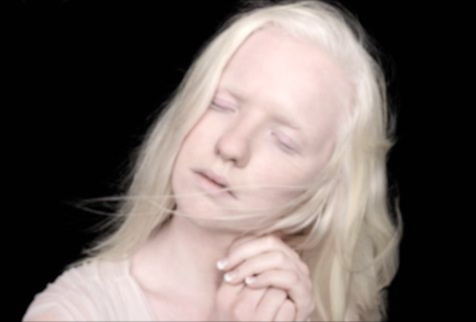

Rolodex Dreams

This essay is the first in a series comprising Rolodex Dreams;  How They Arise; Headful and Life with the Snippets

The old-school Rolodex, invented in 1956, carried a maximum of 400 file cards. Current models have kept to this limit. All the cards are mounted on a wheel. If the wheel were somehow set to rotate steadily without human intervention then its cards would rise alphabetically into view one by one.

The rotary desk-top device was designed as a data store and memory surrogate but in its capacity as a provider of discrete, framed packets of information it can be seen as a crude thinking machine – the slow-witted nephew of, for example, the punch card data sorting system, introduced by IBM in 1928, that would evolve, under the auspices of Bletchley Park, into decryption machines. The much earlier Jacquard loom, patented in 1804, had seen the punch card used to accelerate the production of complex fabric patterns.

The Rolodex accessed by human intervention i.e. its normal use, delivers something that superficially resembles planned, deliberate, focused, step-by-step thought. Such a thing probably doesn’t exist but an enormous amount of effort to produce it is continuously applied to such a project by our species.

Our experience of thought is generally of a streaming process in which the separation of the stream into component units is not deemed essential unless, for example, it is considered that a problem might be solved by selecting and rearranging some of these units into a plan, an explanation, a theory etc. By clustering one specialised array of units – contact details – into an outsourced collection, the Rolodex eases a small part of the sorting process. It’s a list on a wheel. It does not think, it serves the thinker.

Of the many mental activities not taken into account by sophisticated computing devices, let alone rudimentary mechanical memory aids, is the business of sorting the material that, in human thought, is suppressed in order to achieve momentary focus. A significant category of mental activity is simply missing from the picture. Coders and their programmes cannot take into consideration more than a tiny fraction of factors that seem, like junk DNA, to have no functional significance. That, indeed, is the point of these single-minded devices.

In the case of the Rolodex it’s taken for granted that the other 399 available sets on the rotary wheel will not crowd in on the card you’re reading or that rogue cards will simply appear for a moment then vaporise.

In our everyday minds arise myriad mental effects, some of them thoughts, others thought-like, others mere wisps that vanish within moments of their arrival, routinely passing through consciousness and out the other side. These are routinely ignored. They must be ignored. We all learn how to do this.  Some can do it better than others. The Rolodex, in its modest way, does it for you. The device does not hold a vast number of filecards that might attempt to emulate the capacity of the mind. It would be at least as big as a small county if it did. The desk would have to be situated inside it somehow. It would be widely regarded as a storehouse of utterly useless information.

In the case of the Rolodex you fill the filecards one by one and clip them onto the wheel. It becomes a citadel of unlikely purity. It cannot dealphabetise itself and it will not generate novelty. It has, therefore, a comforting quality if comfort is to be found in packets of data that arise in single file. It was not, of course, designed to do any more than augment memory and organise data sets.

Staying with it for a little longer, however, imagining a modestly enormous device – a London Eye of a filing system, loaded with numberless bits of information and monitored by a human observer – then, over time, as its great wheel rotated, what appeared at first to be a succession of discrete, unrelated cards would appear intermittently to form classes, clusters and themes. Obviously this would only occur if the human observer were to attribute significance to any combinations and sequences that might crop up. Even if a pattern could be discerned it would probably be construed as unworthy of remark; in the genetic sense, a ‘sport’ but not one with desirable characteristics.

On the other hand, the observer need not find any significances at all, they might simply regard links as inevitable and unimportant.

It’s tempting to compare these discounted instances to the contents of daydreaming – a state of mind in which thinking has no apparent purpose, it just ticks along. It feels like it could go anywhere. (If the thinker has this thought during a daydream the daydream will abruptly terminate.) The daydreamer may not even know they are daydreaming. So little value is conferred that the paying of attention itself is suspended. You could almost claim that most daydreaming is lost as soon as it is found insofar as awareness of the activity is largely retrospective – you realise you’ve been doing it and within moments all that was air is vacuum.

Daydreams often strike us – if we can manage to assess them at all – as random successions of thoughts having no connection to each other. We tell ourselves, perhaps, that this is what unfocused thinking is. It may be the case, however, that the reduced attention paid to daydreams facilitates the emergence of another class of thought, one that is as worthy of consideration as the purposeful organising that shapes much conventionally motivated thinking.

With daydreaming you are off-piste. One moment you’re pursuing a thought and the next moment there is no pursuit. One thing has led to another. But you didn’t particularly notice. You wouldn’t be able to retrace your steps.

Daydreaming is always off-piste. It cannot be initiated and it is not possible to detect the moment at which the conscious pursuit of a thought is suspended, either at the moment when this occurs or in retrospect. The moments that ensue cannot usually be counted, even if they were separable into countable units, which they may not be. It is conceivable that they could go on for hours. But they don’t. Something breaks the flow and the piste is restored within a split second. You may be able to remember where you were before the interruption – gazing out of a bus window, maybe, thinking about something more or less purposefully. But it is, alas, impossible to recall what you were thinking just a split second before going off-piste. If it were possible then you could examine this pre-off-piste thought in order to see the extent to which it might have either enabled or fallen foul of the daydreamed thought that followed it.

If you could do this then you could identify the characteristics of an off-piste enabling thought and deliberately shape other thoughts in such a way that within moments of thinking them you were off-piste. Such a proposal only makes sense if one subscribes to the notion that going off-piste is worth it even if you can’t remember what you were daydreaming about.

The goal is to become capable of lucid off-piste daydreaming. It is not the case that everyone needs to do this. Some will find it useful however.

The tissue is thin. Think of those times when you’re reading drowsily. Someone has been trying to get three lengths of wood to fit in the side of a wall. This really needs to be done. A group of people is still waiting for the arrangements to be concluded. They are standing near the wood.

Excuse me for a moment, I nodded off.

In so doing I dropped into an ongoing situation featuring wood lengths. But now I’m back, drowsily reading whatever I was reading before I dropped off. I can just about make out the tail feathers of the last moments spent within the daydream before I snapped out of it. Something to do with wood. The tissue is so thin. Within a second the sentences printed on the page had disappeared and were replaced with something that apparently had nothing whatsoever to do with what I was reading. The absence of conventional sense in the thoughts and images that ensue is spellbinding. It feels like they could stream indefinitely. There appear to be no constraints other than impending sleep or someone dropping a cooking implement next door.

It’s remarkable how thin the tissue is. We sometimes speak of our dreams with awe, as if we were honoured to be visited by these compressed, elusive packages of bad grammar. And even if we don’t improve the grammar thereby knocking some sense into the irruptions, they often tend to be memorable, if we remember them, despite their lack of legibility. Almost as if there were something irresistible about illegibility. And the thing is, these tricky items don’t actually require a tired or drowsy subject – they find the latter convenient certainly but it’s not as if you daydream only when you’re gazing out of the bus window or similar, you can be wide awake firing on all cylinders and all it takes, in this case, is the fact that there’s nothing much to do until you get to your destination. And next thing you know…

11/2024

‘Rolodex Dreams’ begins to develop ideas that are extended in subsequent Strength Weekly essays:
How They Arise

Headful

Life with the Snippets

Peter Did Not Have A Cold As Such

Peter did not have a cold as such what with the weather but he wanted to sneeze and as it rose within him he reached out to put his hand over his mouth and grasped the wrist of a person near him in the road and sneezed into their hand. They said Bless You and Peter said Thank You and Susan said Peter you dozyarsed fuck you just sneezed into this person’s hand for fuck’s sake. Are you going to apologise to this person or what? Peter said I haven’t got a cold. Great said Susan so you can hurl into their hand! Peter said I kind of thought it was my hand. He said I will go to them and I will dry their hand with my hair. He actually had a number two on the sides but the top was long enough so Peter went to them and did that and their hand was dry.

David Gale’s Peachy Coochy Nites #20

20 slides are each projected for 20 seconds and spoken to for the same period, no more, no less. The script for one of these precision-based presentations is found below.

Season 1: PC#

I had hitched a ride from Lord Alan Sugar to the border of Essex and Middlesex. We got on well. Lord Sugar invited me to stay in his bungalow. He was quite pleasant. But it was time to move on. We could chat amiably enough but there were sharp ideological differences.

Lord Sugar gave me some sandwiches and an old Morris. With time on my hands, I decided to drive at random. There was an old eight-track cartridge, the precursor to the tape cassette, under the seat. I recognised the feel of the plastic casing before I pulled the thing out. This meant nobody had felt beneath the seat since the 80s.

I was startled by what I saw. The Fleetwood Mac Greatest Hits cartridge was the last one ever to be released, by Warner Brothers, in November, 1988. This was a collector’s item! I had to sell it as soon as possible then I could finance my new in-car lifestyle and travel widely throughout the United Kingdom.

I picked up some triplets, who are normally considered very lucky. Not lucky as people but for the person who collects them. I had Tom in the front and Rob and Bob in the back. I asked them what they were up to. Each spoke one word at a time but in perfect sequence.

They said “We find it difficult to get work because we do not like to be apart.”

I said “There must be work for you on television.” 

“That’s no good,” they replied “everyone has seen triplets. We’re more interested in deals.”

“What? Contracts?” 

“No. Three pairs of socks in a pack.”

The brothers seemed to have quite modest ambitions. I was still curious about something though. “Do you find,” I asked “that your sense of identity is three times stronger or three times weaker?” Their response was depressing. “We cannot tell you. We have never experienced ourselves in the solitary state.” I wanted them to go away.


I stopped the car to eat my sandwiches. Another car pulled up behind us with steam billowing from under the bonnet. As luck would have it, the driver and her passengers were also triplets: Lorna, Dawn and Vaughny. Tom and Rob and Bob turned to me: “Sometimes you have the chance. Other times it’s just a curtain of shit.”

I was glad to see the triplets leave. There was something just a little too symmetrical going on. What I needed now was a collector who would buy my rare 8 track cartridge. It seemed to me there were two sorts of collector: those who actually liked what they collected and those that didn’t.

The second group sounds pointless. Why would you bother? The thing is, I suppose, that it enables you to control the world. It gives you a platform. You are the explorer. The detective. You go out and bring back the goods. You have personally accumulated the entire contents of a category. It doesn’t matter what. Now you are free.

Perhaps in seeking a buyer for the 8 track I was passing up a grander opportunity. What would I do with the money? Live the life of Lord Alan Sugar? Surely there was more to it. I went to the Record Collector’s Fair in Ipswich Corn Exchange and sold the Fleetwood Mac for several thousand pounds.


I then purchased copies of all the 8 tracks released in 1988. I had two boxes full. Most of them were shit. I was mindful, nevertheless, of Baudrillard’s essay ‘The System of Collecting’ in which the gifted French thinker had described  ‘a powerful anal-sadistic impulse that tends to confine beauty in order to savour it in isolation.’

Fuck. I wasn’t into that. The 8 tracks were really ugly. I’d never stick them up my arse. I preferred it when he compared the collection to a harem. He said it was a series bounded by intimacy and an intimacy bounded by seriality. That didn’t sound too bad. Anyway, I was king of the world now. I needed the Fleetwood Mac to complete the set but it could wait.

Everything felt light but deep. The objects in the world were like  weights on a diver’s belt – and now I had left them behind. I drove the Morris to Ramsgate and took the ferry to Ostend. I caught the train to Tibet with minutes to spare. I knew exactly what I wanted. I was free but I had no power.

Thondup said if you concentrate hard enough, and I mean really hard, the mind can be brought to create any particular object desired. The Tibetans call this concretized visualization a Tulpa, meaning a magically produced illusion or creation. At first it’s a purely mental image but it gradually takes material form.

They were a simple people. Clear and straight. They wore no watches and knew nothing of glamour. They carried old lager cans full of sparkling river water and they came down the street from the houses and they came down from the hills above the houses. They sang as they walked along and everyone knew that their hearts were open and joyous.

Osma was their leader. Where the others were pleasant but not obtrusive, Osma stood out. She was firmer and more impressive than her lighthearted companions. When she spoke she would touch me lightly, which the others did not. When they came towards me, she was at the forefront and the others, joyful as they were, were not as radiant as she.

I walked beside Osma and slowly we moved ahead of the others and their soft laughter. Her hand lay lightly on my forearm and her wonderful dress with its flowers swirled around her legs. We didn’t need to talk much – she would breath and hum and nod her head very slightly and I knew she knew my thoughts.

I found I could look through her eyes and I could see with her delicacy and I understood how she let the world run through her and I smiled and she saw me and looked at me with care and I knew that she liked that I looked and she looked like she saw what I was which was so pleased.

We walked through the night and the ones without names fell away, hanging back, their murmurs and whispers fainter and fainter but Osma was stronger without them, she grew by the moment, the more that I opened myself to her presence her presence grew bolder and sharper, she slipped like a snake from old skin to new skin.

We lived where we could in woods or flat places sometimes for months sometimes for days. If she was, at times, distant, then I would bring her back, bring her down to earth. I would set aside my mementoes and gaze at her and back she came. She had only gone while my mind was elsewhere.  When my mind was there she was there.


David Gale’s Peachy Coochy Nites #10

20 slides are each projected for 20 seconds and spoken to for the same period, no more, no less. The script for one of these precision-based presentations is found below.

Season 1: PC#10

Previously on Peachy Coochy I had continued in my attempt to dispel any quality of fiction in my presentations, adopting an unadorned style in which the clumsy attempts to obscure the autobiographical would be replaced by a transparent directness. I noticed, for example, the preponderance of images of larvae, grubs, beetles, insect eggs and maggots in my repertoire.

I was aware that, for me at least, they represented abject levels of consciousness: all that was most repellent and shameful in my sense of myself. In Peachy Coochy Number 9, for example, I alluded explictly to my attempts to sever contact with my shame, going as far as leaving it to languish in a house in Hertfordshire.

People say to me “What is it about Hertfordshire, David? You seem to regard it as the arsehole of the south-east. A repository for that which must be relinquished, a terrain of aching boredom, a place where, after mixing  Red Bull with Wifebeater, disconsolate late-night youths wrench bus-stops out of the ground and propel them through the window of the doner kebab takeaway.”

“You said it, not me,” I tell them. The desolate eventless core of the county is to be found in Royston, where, for several days, I installed myself in a B&B near the Sports Centre. Lady Roisia founded the town in the 11th century, erecting a cross on a boulder at the junction of two ancient tracks. The Royse Stone, as it was known, is a glacial erratic.

Instantly I realised the significance of my appalling sojourn. A glacial erratic is a stone deposited far from its place of origin by a glacier.  There is no question of return. There are no trucks big enough and nobody can be bothered anyway. Why would you tidy up that which nature has in her wisdom wrought? I decided to go to the BackPacker Pub in King’s Cross. 

I wanted to squeeze between shouting Australians and hoist foaming tankards in amiable anonymity. The pub had changed hands and was now called the Cross Kings. The cultural historian and mythographer Marina Warner was drinking mineral water by the window. I admired her work greatly and asked her to sign my wrist. She asked about my maggots and suggested that they could be seen as emblems of possibility.

In the back garden of my house I have a sizeable shed where I keep the objects that I photograph for the Peachy Coochy presentations. You can see a wicker chair through the glass door there. When I got back from the pub I went in and instantly reeled back in horror. There on the chair, seething with maggots,  was the denuded body of my songbird Celine, named after the singer Celine Dion.

A great rage welled up within me. Even in that moment, however, I was able to remind myself of what Marina had told me. I crushed Celine’s fragile sack of a body in my hand and swallowed it whole. The maggots writhed as they passed from my mouth into the warmth of my pharynx and thence to my larynx. I recalled that a friend from the BackPacker days had given me valuable information about such creatures.

Among the central Australian aboriginal tribes the so-called witchetty grub is valued as a foodstuff. The raw grub tastes like almonds and when lightly cooked the skin becomes crisp like roast chicken while the inside becomes light yellow, like a fried egg. The grub has a high protein content. I would be sustained by Celine’s murderers as I sought to avenge her.

Little did I expect the dreadful contest that I had precipitated in my own stomach. As the grubs swelled and writhed, steadily consuming  the lasagna upon which I had dined prior to my insectivorous digression, the body of the little songbird began to revive. I felt light flutterings against the lining of the warm pocket that until then I had seen only as the place where grub goes.

The stomach, however, is not designed to support life. The levels of hydrochloric acid necessary for digestion are capable of dissolving the bone of the beak and reducing the feathers to an uneven plastic sheath. I felt, however, that there was little that I could do. Then it occurred to me that I could tip the scales in favour of Celine by eating certain carefully chosen foods.  

I went to a vegetarian restaurant near Warren Street tube station and ordered a sunflower seed bake. I found myself sharing a table with a young American competitive swimmer. She was in training for the London Olympics 2012. We talked about a range of non-swimming topics such as action painting, cheap reading glasses and the remarkable range of phobias routinely presented at the doctor’s surgery.

As we talked I became aware that, far from divorcing her profession from her predilections, everything she said reflected her experience at a deep level. She related to action painting because of her engagement  with swimming free form, to reading glasses because of her absorption in submarine optics and phobias because her morbid fear of water gave her a rabid energy.

Celine reacted well to the sunflower seeds. She consumed them eagerly and, I suspect, began to peck at the maggots. I began to wonder what their reaction would be. Despite the predations of the songbird they were well adapted to the warm, moist environment. Was it possible that they would soon transform? If so, what form would they take?

When it came it took me completely by surprise. I had never imagined that the two sets of DNA were compatible. The lights were blinding but I was drawn to them. The dust from my arms rose in shimmering clouds. My voice was thick but fading fast. I shrugged and soared softly upwards. The dead skins of the transfigured maggots  showered from my arsehole. Now I was the Mothman.

I soared over the land as we know it. It was really great, looking down and everything. Everyone wants to fly and I’m no exception. As I winged my way over Edinburgh I heard a piteous piping. I realised that the songbird Celine was still inside me, revitalised by her meal and keen to spread her wings. I opened my mouth and uncoiled my proboscis.

Fluttering, she twisted through my tubes and opened like an orchid in the air. Now we flew together. My own voice was a high-pitched twittering shriek but hers was a clear, high, pealing, cry. We soared over the military bases at Fairford, Feltwell, Greenham and Lakenheath. Celine’s revisioning of ‘The Power of Love’ brought  the jets up. We could see the pilots in the windows.

“Wolfman engaged offensive!  Two bandits right ten, one mile, low!” To my astonishment Celine suddenly spoke out: “Mothman, this is Mothman, visual, do not press!” “Bandit closing, committed.” “This is Mothman. Abort, Wolfman, bug out. I have super-powers and will deploy.” “Mothman, this is Wolfman, your legend precedes you. Aborting, aborting.”

In the early 80s it was found that young American fliers responded more precisely and obediently to a female  rather than male voice transmitted from the control tower. It is conceivable that a reversion to a mother/son relationship is more readily effected in a hairline situation. The reluctant politeness of the everyday “Yes, Ma’am” is overridden by the submissive “I copy that”.

Celine, nestling on my back, had seduced the fliers with her siren song. As they arced away we swooped and soared, tonguing  tiny flies, spinning in the light, drinking the rain, gazing down on the world remade. We had left shame and putrescence behind but we knew we would never land.

Susan Looked in a Pool

In ‘Susan Looked in a Pool’ when Susan found a pool in which there were anemones she said ‘See?’ and Peter said ‘Whatever’s that?’ and she said ‘Anemone.’ Peter laughed in her face ‘It’s enemy.’ Susan said ‘That’s what it’s called, fucko.’ Susan said ‘When you touch it spikes come out.’ He put his finger on it and they stick to the tip of it. ‘Yikes!’ he goes. ‘Where’s the fun in that?’ She says ‘You don’t see them so much at the moment.’ The thought comes straight into Peter’s mind ‘Is there any money in it?’ Susan goes ‘Anemone, for fuck’s sake.’ Peter’s eyes cloud and briefly we see his halting charm.